






.svg)
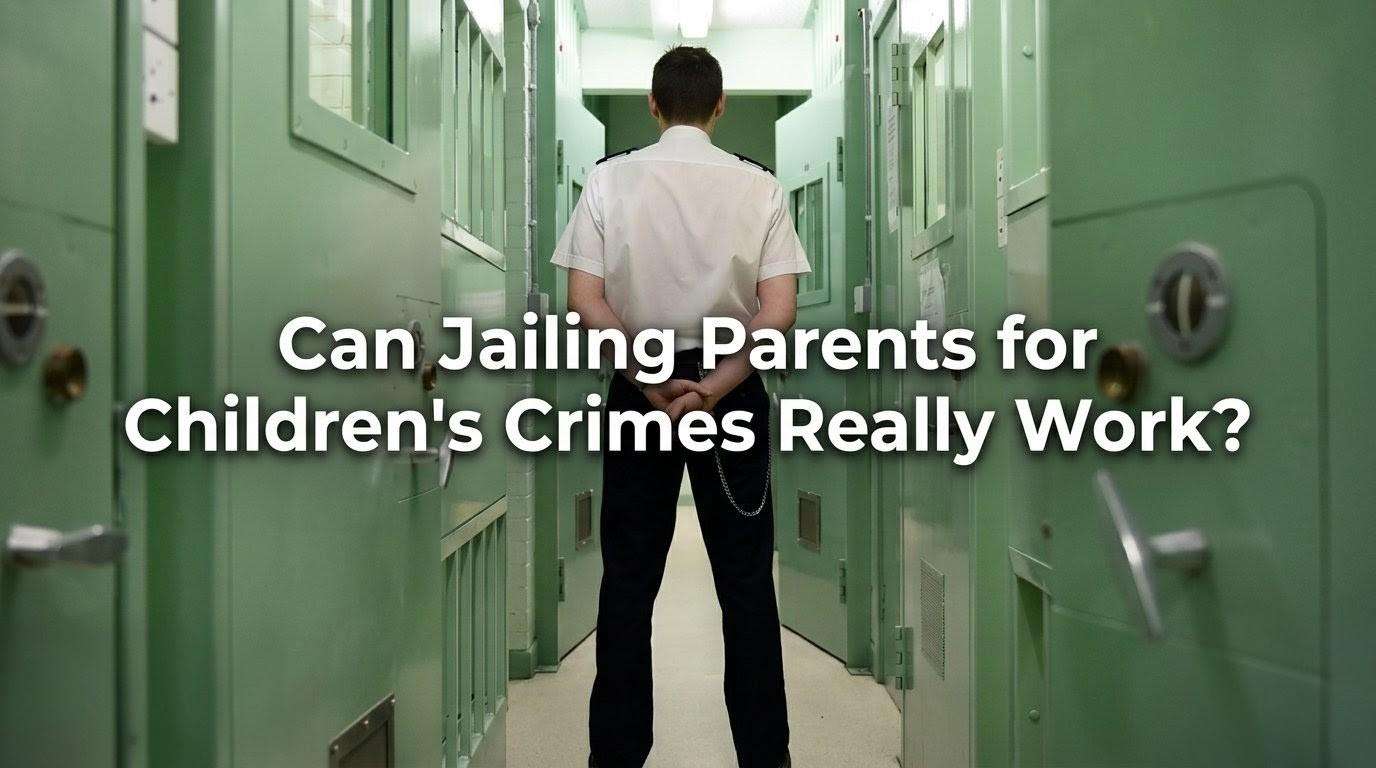
Parents in England and Wales could soon face docked welfare benefits or custodial sentences if they wilfully fail to curb their children’s criminal offences, according to sweeping youth justice overhaul proposals announced by Westminster ministers. Youth Justice Minister Jake Richards confirmed the policy direction, explaining that the judicial system must hold guardians to account in a proportionate yet decisive manner to preserve community safety. Under the proposed statutory framework, expanding upon White Paper measures introduced by former Justice Secretary David Lammy, magistrates and Crown Court judges will receive widened discretionary powers to penalise non-compliant parents whose children enter the youth court system.
Daily Dazzling Dawn understands that the initiative aims to overhaul statutory Parenting Orders, which currently mandate parental attendance at guidance or counselling sessions for up to twelve months. Breaching such orders remains an existing criminal offence subject to a maximum fine of one thousand pounds, but ministry officials intend to append punitive financial sanctions and potential imprisonment in the most egregious circumstances. Minister Richards described the proposed model as an essential carrot-and-stick mechanism, ensuring that parental engagement is met with legal responsibility while leaving custodial penalties as an extraordinary backstop for judicial discretion.
Institutional Scrutiny and Penal Feasibility
The legislative expansion emerges against the backdrop of significant systemic findings, notably Phase One of the Southport Inquiry report, which identified profound oversights by the parents of Axel Rudakubana alongside multiple state agencies prior to the fatal 2024 stabbings. While ministers contend that statutory enforcement will bridge gaps where voluntary interventions collapse, penal reform bodies and legal specialists have voiced formidable operational objections regarding whether punitive measures against parents can functionally reduce youth crime.
Daily Dazzling Dawn learned that penal policy analysts view custodial penalties for guardians as counter-productive to household welfare. Andrew Neilson, director of campaigns at the Howard League for Penal Reform, told to journalists that reforming parenting orders through penal threats risks being ineffective at best and detrimental at worst. Neilson noted that removing a caregiver into an overcrowded prison estate fundamentally destabilises vulnerable families and fails to address the underlying drivers of youth delinquency. Corresponding concerns were raised by Jess Mullen, chief executive of the Alliance for Youth Justice, who questioned how custodial punishment could offer the stability necessary to steer an adolescent away from anti-social networks.
Statistical Realities and Jurisprudential Debates
Historical data from the Ministry of Justice indicates that the judicial uptake of Parenting Orders has contracted steeply over recent decades. Official records show that courts granted more than one thousand parenting orders during the 2009 to 2010 judicial year, compared to merely thirty-three orders issued across the entirety of 2022 to 2023. This ninety-seven per cent collapse in usage illustrates the reluctance of frontline magistrates and youth offending teams to rely on coercive statutory instruments when working with entrenched family dysfunctions.
Simultaneously, the government has dismissed growing institutional demands to recalibrate the UK age of criminal responsibility, which remains fixed at ten years old in England and Wales. The Bar Council, representing barristers across both jurisdictions, previously urged Whitehall to raise the threshold to fourteen years, arguing that criminalising primary-school-aged children constitutes an ineffective and disproportionate response. While the United Nations continues to criticise the British threshold as one of the lowest in the developed world, Minister Richards rejected any alteration, asserting that altering the minimum age of culpability is not a government priority and would erode public confidence in justice administration.
Devolution and the Timeline for Reform
Statutory implementation of the proposed penalties is not expected to happen immediately, as the government continues consultations with regional authorities, youth offending teams, and judicial bodies. Ministers convened regional leaders and child welfare specialists in Manchester to assess how devolved powers and localized social care budgets might support early intervention strategies before primary legislation is drafted for Parliamentary approval.
Any formal bill containing benefit sanctions or custodial measures must clear parliamentary scrutiny across both the House of Commons and the House of Lords, alongside mandatory regulatory assessments with the Department for Work and Pensions. Consequently, legal commentators project that practical enforcement on the court benches is unlikely to occur until late in the legislative calendar. Until such statutes pass into law, magistrates remain limited to standard counselling mandates and civil enforcement measures, leaving ministers under sustained pressure to prove whether coercive parental penalties can realistically resolve systemic adolescent offending.