






.svg)
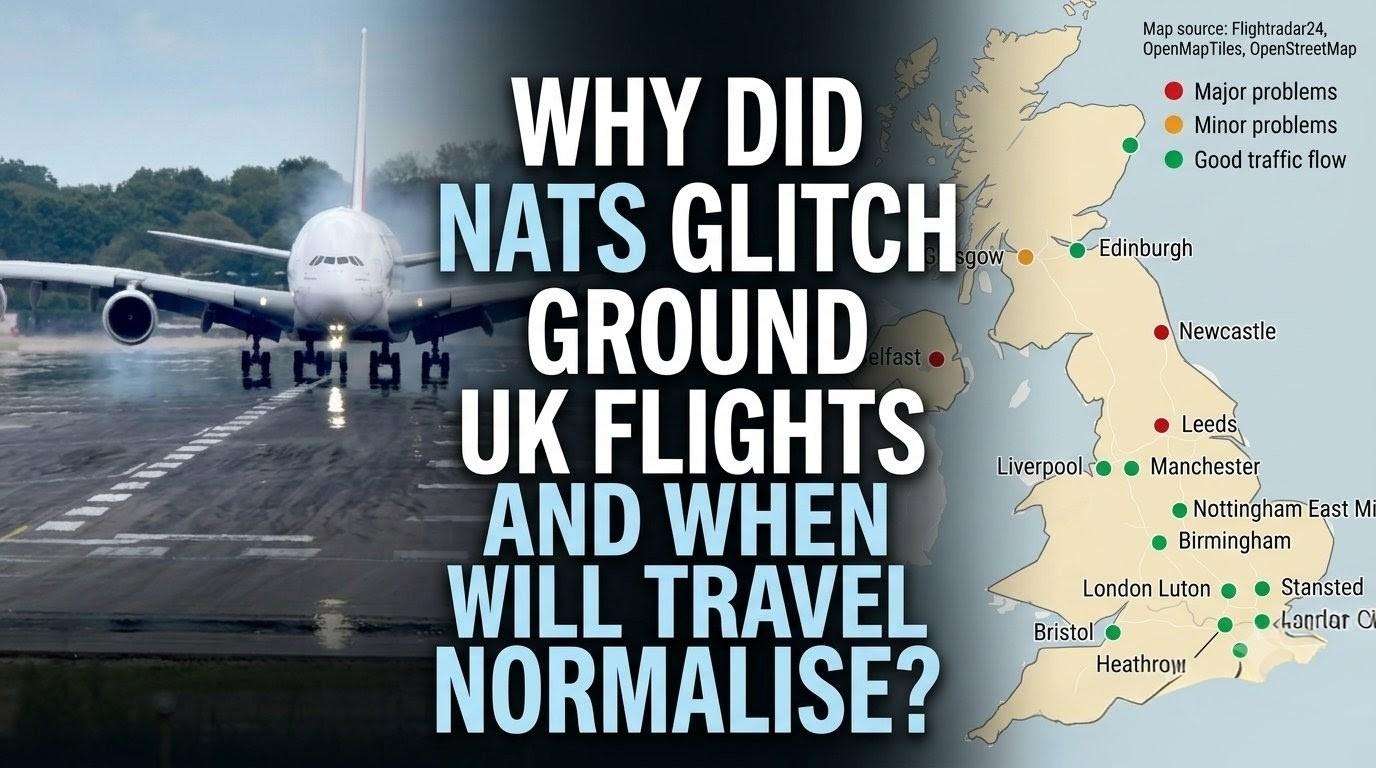
A major technical fault at the Prestwick air traffic control centre in Ayrshire disrupted air travel across the United Kingdom on Monday, 21 September 2026, delaying roughly 200 commercial flights and grounding dozens of scheduled departures. National Air Traffic Services, the public-private partnership managing British civil airspace, implemented immediate flow restrictions across northern England, Scotland, and Northern Ireland after system anomalies compromised terminal routing capacity. Engineering teams managed to rectify the hardware and data feed issue within hours, yet industry projections confirmed to Daily Dazzling Dawn indicate airline operations will require until late Monday evening and into Tuesday morning to achieve total operational normalcy as aircraft and flight crews return to position.
The disruption originated inside the Scottish Air Traffic Control Centre at Prestwick, an operational nerve centre overseeing upper airspace routing and major approaches into regional airports. To maintain essential mid-air separation safety protocols while the processing fault emerged, controllers applied strict air traffic management regulations that severely capped flight movements into and out of airports north of the Midlands. Facilities in Manchester, Glasgow, Edinburgh, and Belfast suffered immediate consequences, with ground stops stranding passengers across terminals and aboard stalled departures on airport aprons.
Aviation data providers verified that at least two dozen flights faced immediate cancellation during the opening hours of the outage, while EasyJet subsequently grounded roughly 50 routes across northern domestic links and select European destinations including Amsterdam and Bordeaux. Regional operations including Manchester Airport, Belfast International, George Best Belfast City, and Edinburgh recorded multiple groundings, whereas London Heathrow, Gatwick, and hubs south of Manchester sustained secondary hold-ups stemming from delayed northbound sectors.
Daily Dazzling Dawn understands the immediate cause centred on a critical processing fault affecting regional control data links, forcing controllers to manually manage flight intervals rather than rely on primary digital guidance interfaces. National Air Traffic Services formally confirmed engineers rectified the core operating system before midday, lifting formal sector capping to permit normal traffic flow. Transport Secretary Heidi Alexander confirmed that engineers had eliminated the technical defect, warning passengers that severe knock-on disruption would persist throughout the remainder of the day while flight networks reset.
Aviation analysts warned that resolving digital systems does not immediately restore airline timetables. With aircraft parked out of sequence across distant airfields and flight crews reaching mandatory statutory duty limits, network stabilisation remains a delicate logistical exercise. Flight scheduling specialists speaking to Daily Dazzling Dawn noted that while main trunk operations should gain traction by Monday night, complete network normalisation across heavily congested schedules will take between 12 and 24 hours, leaving Tuesday morning flights vulnerable to lingering displacement delays.
The Prestwick breakdown has ignited fierce criticism from carrier executives who are facing extensive operational costs and passenger care liabilities. Steve Heapy, the chief executive of leisure carrier Jet2, told journalists that recurring infrastructure vulnerabilities are simply unacceptable, insisting the carrier is actively tabulating financial losses to bill National Air Traffic Services directly. EasyJet representatives echoed the frustration, stating that repeated technical vulnerabilities across key processing centres undermine consumer confidence and compromise operational integrity across British aviation.
British Airways confirmed that its customer operations suffered unexpected disruptions across domestic routes connecting London hubs to Scottish and Northern Irish destinations. Senior airline officials expressed extreme disappointment over managing a severe air traffic failure so close to earlier operational disruptions, confirming that ground teams have prioritised passenger rebooking and welfare assistance while airframe positioning stabilizes.
The Prestwick fault represents the fourth high-profile operational malfunction under the stewardship of NATS chief executive Martin Rolfe, reigniting aggressive calls across Westminster for leadership changes. The previous systemic outage on 8 September grounded roughly 2,100 flights and disrupted 330,000 passenger journeys due to a sub-second software anomaly, sparking widespread demands for administrative reform. Political figures, including Reform UK deputy leader Richard Tice, insisted to journalists that the chief executive must resign immediately, urging parliamentary select committees to investigate technical stability, resilience standards, and potential cyber vulnerabilities within critical national infrastructure.
Aviation regulators and consumer advocacy organisations continue to advise all ticketed travellers to verify operational statuses with individual airlines before making journeys to airport terminals. Although control towers are safely routing regional airspace once more, the operational aftermath continues to ripple across British flight lines as carriers work methodically through the backlog.