






.svg)
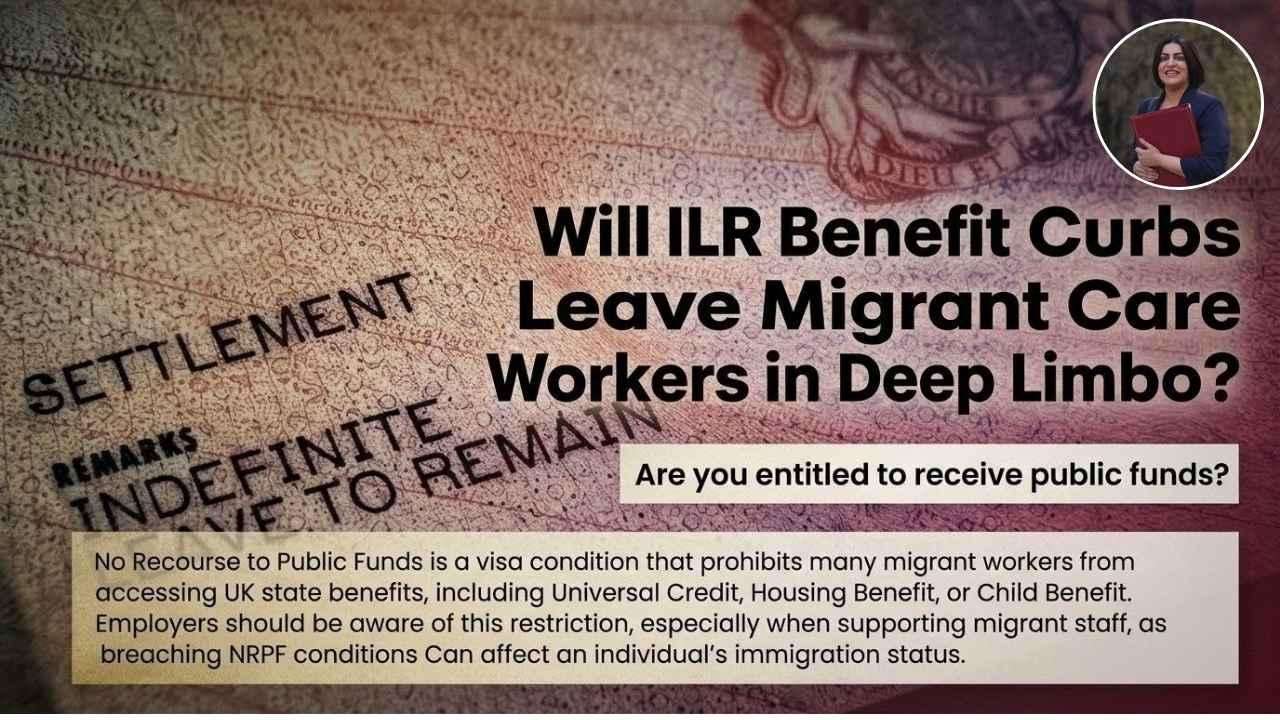
Home Secretary Shabana Mahmood conceded ground at the Labour Party conference in Liverpool on Monday by indicating that the government will soften its planned earned settlement overhaul, yet hundreds of thousands of migrant workers remain locked in legal limbo. While Whitehall retreats from imposing a retrospective ten to fifteen-year qualification hurdle on existing visa holders, ministerial sources confirm that alternative restrictions are being drafted behind closed doors. Rather than providing immediate relief to overseas carers and National Health Service clinicians, Mahmood’s remarks have unleashed fresh anxiety across diaspora households regarding post-settlement exclusions, severe benefit bans, and the fragmentation of family qualifying timelines. Daily Dazzling Dawn understands that Whitehall officials are exploring primary legislation that would, for the first time in modern immigration history, attach a No Recourse to Public Funds condition directly to Indefinite Leave to Remain.
The prospect of preserving a five-year qualifying route has done little to calm frontline personnel who now face structural curbs on their civil entitlements. Under standard immigration rules, attaining settled status immediately confers equal access to Britain's social safety net, enabling households to claim child benefit, Universal Credit, and local housing support if hit by personal illness or bereavement. Under the earned settlement consultation proposals actively reviewed by Home Office policymakers, ministers are considering decoupling settlement from welfare entitlements, reserving social security access strictly for individuals who subsequently secure full British citizenship. Migrant families who endured years of low wages in the residential care sector fear they will be forced into an ongoing precarious status, effectively barred from emergency public funds despite paying regular national insurance contributions and income taxes.
Read more: Shabana Signals Major Climbdown to Save 5-Year ILR for UK Migrants
Frontline workers also face unresolved fears over dependants and intermediate penalties. Legal advisers note that under original departmental models, claiming legitimate in-work support during a lawful visa period was mooted to add between five and ten years to an applicant's settlement clock. Although Housing Secretary Angela Rayner and trade union leadership succeeded in stalling retrospective baseline increases, the Home Office has refused to explicitly guarantee that dependants will settle on the same timetable as principal visa holders. The continued silence on whether children and non-working spouses will have to satisfy independent economic contribution benchmarks leaves breadwinners terrified that their families could be split across multi-tiered legal statuses.
The widening policy fissure has triggered intense public scrutiny across civil society and digital platforms, highlighting stark ideological divisions over immigration economics. Commenting on the ongoing crisis on Daily Dazzling Dawn, reader Jay Shah praised Cabinet resistance to the Home Office crackdown, writing: "Angela Rayner thank you for being our backbone, we will remember you as an iron lady". Highlighting the acute operational risks confronting social care facilities, reader Iqbal Ahmad warned: "99% care worker will quit jobs after getting ILR and will move to another professions if they will implement 15 years ILR to new entrants who will come and do these care jobs for 15 years".
Conversely, widespread public concern over immigration levels continues to drive political pressure from domestic constituents demanding uncompromising enforcement. Articulating this perspective, reader Jon Higgins argued that voter mandates cannot be ignored, stating: "The ILR and immigration reforms the British public was promised must be fully implemented. Government's loyalty should be to the British public and not millions of low skilled immigrants and their dependents". Higgins further asserted: "Low skilled immigrants and dependents are a huge net negative to the economy and take far more than they contribute. This will be much worse if they are given ILR/permanent residency". He added: "The government is able to change rules regarding settlement at any time. This is not retrospective. If the government waters down on the reforms, there will be a huge backlash from the British public".
These contrasting viewpoints underscore the delicate path the government must navigate as Chancellor John Healey grapples with fiscal constraints. Independent fiscal watchdogs have warned that curtailing legal migration routes could generate an economic shortfall running well into billions of pounds, complicating Treasury budgeting. While departmental lawyers caution that retrospective changes risk humiliating defeats in the High Court, backbenchers insist that imposing a fifteen-year horizon on future care entrants will fatally undermine overseas recruitment for local authority adult social services.
For the hundreds of thousands of foreign medical clinicians and care professionals currently staffing Britain’s wards and care homes, Mahmood's speech delivers ambiguous rhetoric rather than binding statutory certainty. Daily Dazzling Dawn learned that until formal transition rules are laid before Parliament, these households remain paralyzed by escalating living costs, rising visa renewal levies, and the hanging question of whether their hard-won settled status will arrive stripped of the very protections that make permanent residency meaningful.


.jpeg)