





.svg)
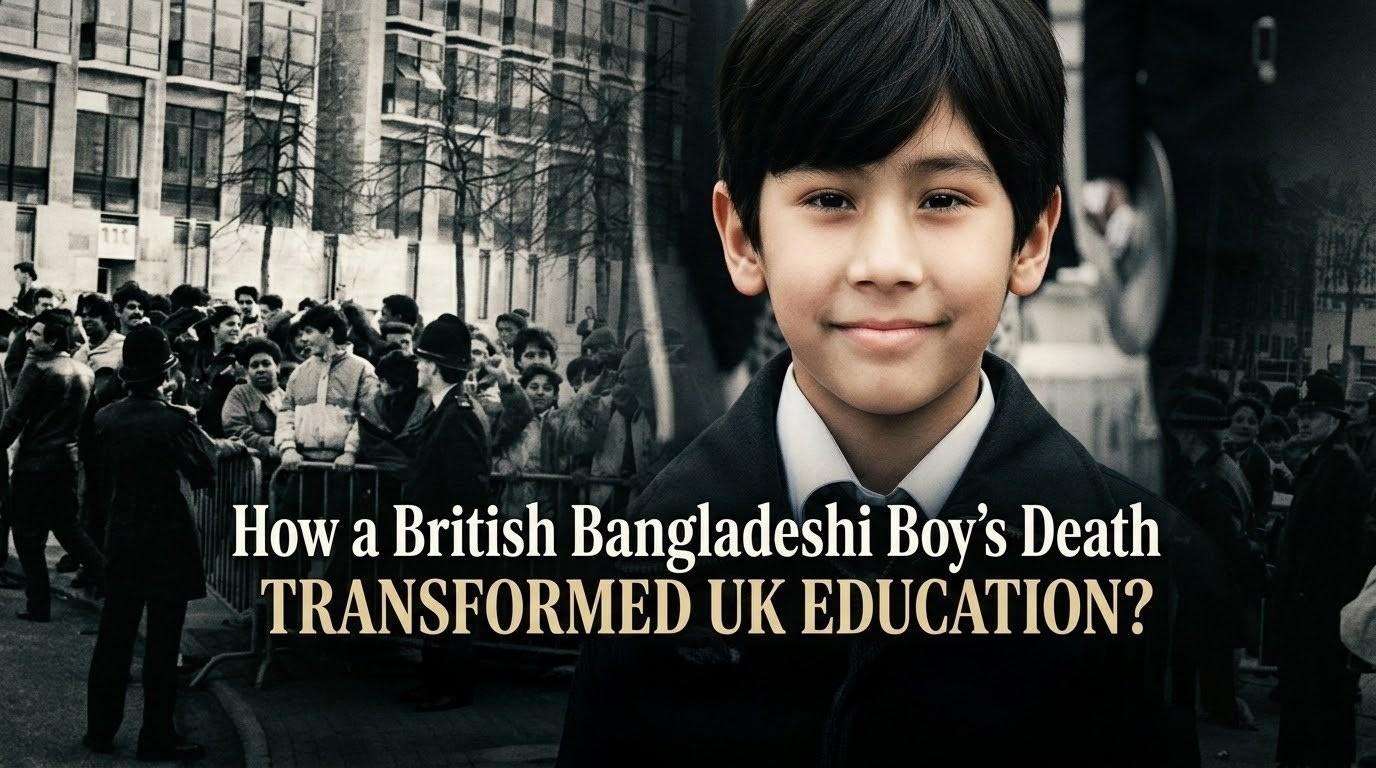
Four decades after thirteen-year-old British Bangladeshi pupil Ahmed Iqbal Ullah was fatally stabbed inside the playground of Burnage High School for Boys in Manchester on 17 September 1986, the legacy of his death continues to shape national discussions on race, classroom safety, and institutional reform. The fatal knife attack, carried out by a fellow pupil, sent profound shockwaves across Greater Manchester and forced municipal education authorities to directly confront unchecked racial hostility within the state school system. As communities throughout the United Kingdom mark National Hate Crime Awareness Week from 10 to 17 October, the tragedy remains a critical turning point in modern British social history, highlighting the enduring struggle against racial violence.
The killing prompted immediate civil mobilization across northern England, as hundreds of community campaigners, parents, and civic leaders demanded absolute transparency surrounding pupil safety and systemic neglect. The public outcry led directly to the commissioning of the landmark Macdonald Inquiry, chaired by eminent barrister Ian Macdonald QC, which formally investigated the environment surrounding Manchester schools during that period.
The inquiry's official findings definitively concluded that the murder of Ahmed Iqbal Ullah was racially motivated. Furthermore, the final report delivered a scathing critique of institutional failures, detailing a broader, unaddressed culture of racial friction and interpersonal violence that had been permitted to fester within Manchester's educational establishments. The comprehensive review exposed how staff and administrators often mismanaged inter-ethnic disputes, transforming the Burnage incident into one of the most exhaustively studied racial justice cases in twentieth-century Britain.
Beyond the courtroom proceedings and official documentation, community advocates have consistently worked to preserve the personal memory of the teenager behind the headlines. Ahmed was an avid Manchester City football supporter, enjoyed the music of British rock group Dire Straits, and demonstrated an early technical aptitude by teaching himself computer programming using instructional books borrowed from his local public library.
His sister, Selina Ullah, emphasized that her brother must be remembered as a vibrant young person whose potential was abruptly cut short, rather than solely as a victim of a crime. Daily Dazzling Dawn learned that she stressed the enduring importance of his legacy, observing that significant constructive progress emerged from the tragedy and that his identity must never be reduced purely to the violent manner of his death.
The public determination to ensure long-term structural change culminated in lasting educational institutions. Established in 1999, the Ahmed Iqbal Ullah RACE Centre, housed within Manchester Central Library, serves as a leading specialist academic repository documenting race relations, global migration histories, social justice movements, and grassroots community campaigning.
Daily Dazzling Dawn understands that the archive safeguards foundational collections detailing civil rights resistance across northern Britain, including original records from the Macdonald Inquiry and personal documents from local community organizers. Managed in partnership with the University of Manchester, the research facility ensures that generations of scholars, educators, and pupils have direct access to historical records illuminating grassroots resistance against racial discrimination.
The arrival of National Hate Crime Awareness Week provides an annual occasion for police forces, local councils, and voluntary groups to review ongoing challenges surrounding community cohesion. The nationwide initiative focuses on increasing hate incident reporting thresholds, remembering individuals lost to identity-based violence, and developing proactive interventions within local neighbourhoods. Reporting originally compiled by community journalist Safiyyah Tayyeb underscored that while grassroots campaigns achieved structural recognition over the past forty years, persistent incidents of identity-based harassment show that the core questions raised by the 1986 murder remain pressing. As statutory authorities prepare updated comparative assessments of modern race and faith hate crime figures, the memory of Ahmed Iqbal Ullah continues to stand as an essential benchmark for civil rights across the United Kingdom.