




.svg)
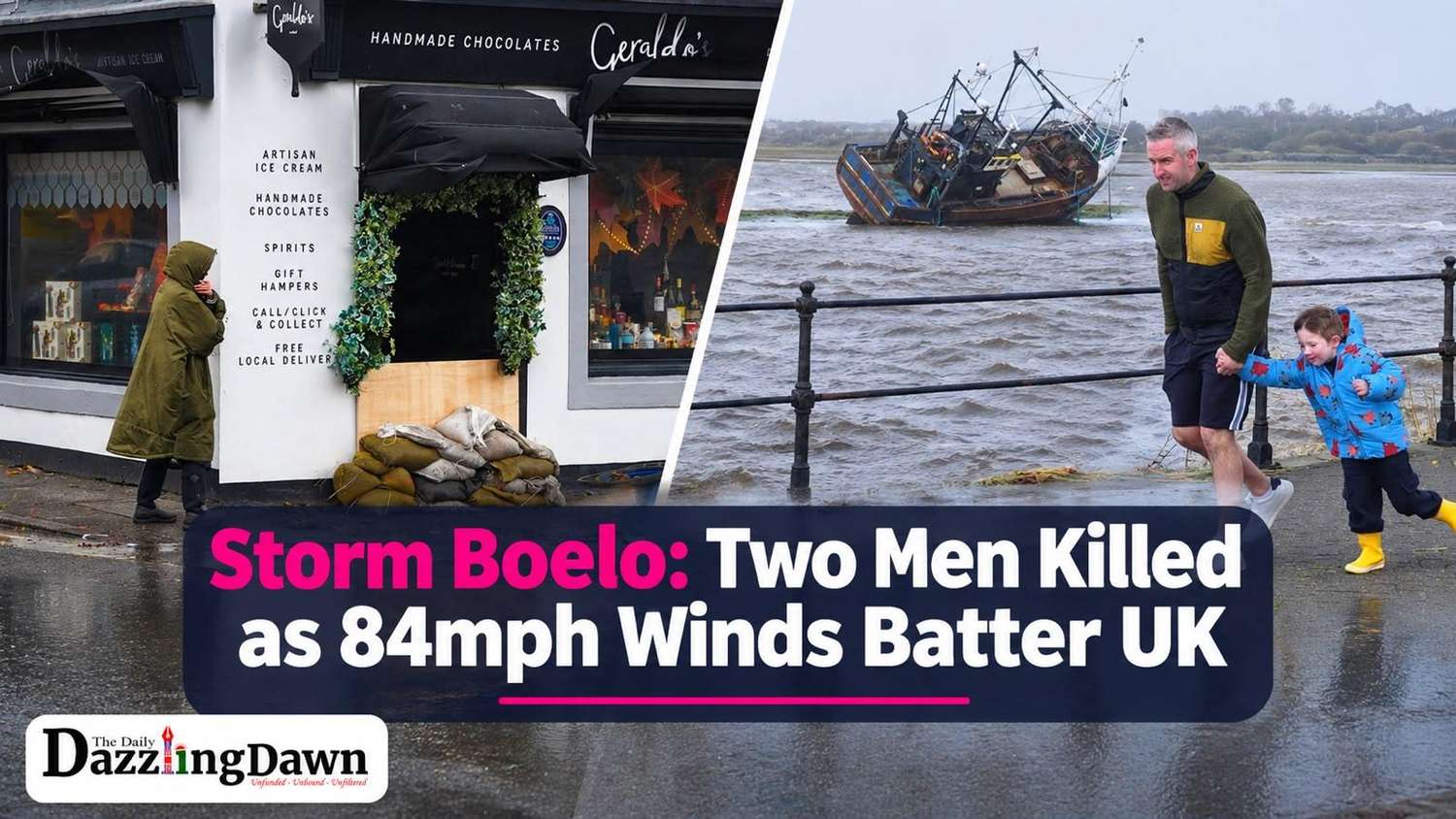
Two men have died after falling trees struck them during Storm Boelo, which brought winds of up to 84mph, flooding and widespread travel disruption across the United Kingdom over the weekend. A 60-year-old man died near Castle Douglas in Dumfries and Galloway, Scotland, while a man in his 20s was killed in north London after a tree fell on his car.
Two women were also taken to hospital after being struck by a separate falling tree in Aberfeldy, Perth and Kinross, according to reports. The storm affected Scotland, parts of Northern Ireland and northern England particularly severely, prompting emergency responses, transport cancellations and warnings about further unsettled weather.
Although the strongest weather alerts had ended by Sunday night, forecasters warned that another area of low pressure could bring fresh rain and strong winds early in the week.
Storm Boelo followed Storm Austen, which brought strong winds to southern parts of the UK on Friday. The two storms in three days created a difficult weekend for emergency services and communities dealing with damaged infrastructure and hazardous conditions.
In Scotland, fallen trees, debris and damaged road surfaces led to closures on major routes. Police also evacuated buildings in Ayr after concerns about their safety, while a caravan park in Ballantrae was evacuated as a precaution.
Emergency services were called to a flooded care home in Sidney Street, Saltcoats, North Ayrshire, on Sunday evening. The incidents highlighted the risks posed by severe winds and flooding, particularly where trees, buildings and transport infrastructure were exposed.
Storm Boelo also caused widespread electricity disruption. According to figures reported on Sunday, around 800,000 homes had experienced power cuts during the storm. By 7pm, approximately 90,000 customers remained without electricity, according to the Energy Networks Association, which represents energy network operators in the UK and Ireland.
Heavy rainfall added to the disruption. Some parts of Scotland received the equivalent of around a third of their average monthly rainfall over the weekend, increasing the risk of surface water flooding and rising river levels.
On Monday morning, the Environment Agency had issued 10 flood warnings, meaning flooding was expected, alongside 65 flood alerts, indicating that flooding was possible. The Scottish Environment Protection Agency reported 10 flood warnings and 11 flood alerts, while Natural Resources Wales had nine flood alerts in place.
Authorities continued to monitor conditions as communities assessed the damage and prepared for further rain.
The Met Office warned that the weather could deteriorate again early in the week. Meteorologist Alex Burkill said conditions were expected to improve on Monday before another area of low pressure brought renewed rain and strong winds on Tuesday.
He said the incoming system was not expected to be as deep or to come as close to the UK as Storm Boelo, but further disruptive weather remained possible.
A yellow wind warning was issued for parts of Scotland, the far north of England and the far north-east of Northern Ireland, running from 3am on Tuesday until midnight, according to the reported forecast.
People in affected areas were advised to follow the latest official weather guidance and remain alert to local flooding and wind-related hazards.
Rail, Road and Air Travel Disrupted
Transport networks experienced significant disruption during and after the storm. Train services were affected by fallen trees, flooding and speed restrictions, with several sections of Scotland’s railway closed. Northern Rail strongly advised passengers against travelling on Sunday.
Network Rail Scotland shared images of flooding at a Glasgow station and fallen trees above railway lines. It also highlighted the risks posed by unsecured garden items near tracks, after images showed a trampoline beneath a train and a shed beside the railway.
Some flights were diverted from Leeds Bradford Airport, while others were cancelled. Road closures across Scotland were also reported because of fallen trees, cables on carriageways and damaged surfaces.
Transport Scotland’s Stuart Wilson said significant recovery work was needed before the rail network could return to normal.
Scotland’s First Minister, John Swinney, met senior politicians, emergency response teams and forecasters to discuss the continuing response to the severe weather.
The priority for authorities remains restoring essential services, assessing damage and ensuring that roads, railways and public spaces are safe to use. Recovery work may continue after the strongest winds have passed, particularly where fallen trees and damaged infrastructure require specialist attention.
For residents, the renewed forecast of strong winds and heavy rain means caution remains important. People should avoid areas affected by flooding or fallen trees, secure loose outdoor objects where it is safe to do so, and check official travel updates before setting out.




.jpg)