






.svg)
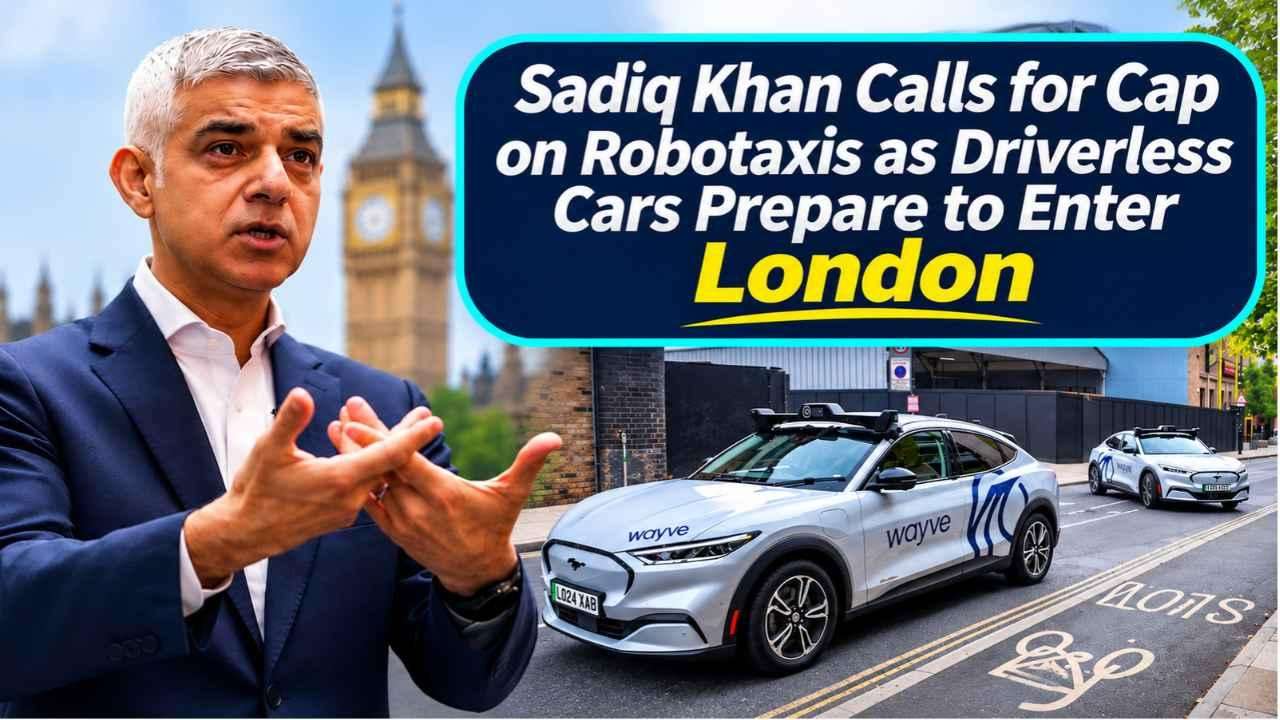
London Mayor Sadiq Khan has called for limits on the number of robotaxis operating in the capital, warning that a large-scale rollout could affect traffic congestion, air quality and the livelihoods of professional drivers.
The mayor's comments come as the UK government prepares to allow fully driverless vehicles to operate on British roads, with several companies exploring plans to introduce autonomous taxi services in London.
Khan said politicians had not fully understood the speed of technological change and questioned whether existing regulations were sufficient to manage the arrival of driverless vehicles.
He warned against allowing the technology to expand rapidly without proper safeguards and called for Transport for London (TfL) to receive greater powers to regulate its use in the capital.
Speaking about the potential impact of robotaxis, Khan raised concerns about how autonomous vehicles could affect London's transport network and people who earn their living as private hire or black-cab drivers.
He questioned whether the introduction of large numbers of driverless taxis could increase congestion, affect air quality and put existing driving jobs at risk.
Khan also argued that London should not simply follow the approach taken by cities such as San Francisco, pointing to the capital's population of almost 10 million, narrow roads and distinctive neighbourhoods.
He said the city needed the ability to control the pace of the rollout, including the possibility of introducing a cap on the number of autonomous vehicles.
Several technology and transport companies are preparing to expand autonomous vehicle services in the UK.
Uber began limited passenger services using Wayve's self-driving vehicles in London in September. The trial operates with a safety driver present in the vehicle.
Meanwhile, Freenow by Lyft is working towards introducing fully driverless Baidu robotaxis, potentially as early as 2027, under the UK's national licensing framework.
Around 24 autonomous Baidu Apollo Go vehicles are reportedly being tested in the London borough of Brent.
The vehicles are designed to operate without a human driver and are already used in some cities in China and the United Arab Emirates.
However, the testing process has highlighted challenges, including navigating roadworks and dealing with unpredictable behaviour from other road users.
Under the current arrangements described by Khan, TfL can give or refuse consent for autonomous vehicles to operate in London but does not have the same powers to manage or license robotaxi services.
The mayor wants the government to give London's transport authority greater control before driverless taxi services expand significantly.
Freenow by Lyft's UK and Ireland general manager, Danny O'Gorman, said the national regulatory framework was an important factor in the company's plans. He added that discussions about how services would be regulated once operational still needed to be finalised.
The company said it was working with TfL and wanted to ensure the introduction of the technology was handled responsibly.
While some drivers' unions have raised concerns about the future of employment, companies involved in the technology argue that autonomous vehicles could also create new roles.
Freenow by Lyft has indicated that some displaced drivers could potentially move into remote vehicle operations, maintenance and servicing work.
O'Gorman also argued that the traditional black-cab industry faces other challenges, including an ageing workforce and the high cost of vehicles.
The debate over robotaxis is likely to intensify as the government moves towards introducing driverless vehicles on UK roads.
For London, the central question remains how to balance technological development with road safety, transport management and the livelihoods of existing drivers.





.jpg)



.jpg)