






.svg)
Ministers have refused four times to rule out dragging state pensioners into paying income tax from next spring, as mounting government borrowing costs and a projected £100bn quantitative tightening shortfall leave Chancellor John Healey confronting severe fiscal turbulence ahead of the October Budget. Official labour data released on Tuesday, 15 September 2026, confirmed that average weekly earnings rose by 3.9 per cent across the three months to July. Under the statutory triple lock guarantee, the annual state pension will surpass £13,000 for the first time in April, breaching the frozen personal tax allowance of £12,570 and creating an immediate fiscal dilemma for HM Treasury.
Treasury Silence Fuels Pension Tax Anxieties
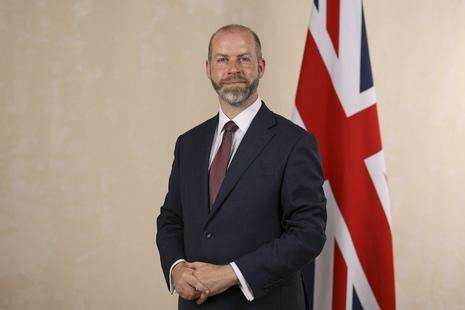
Appearing on national broadcast media, Business Secretary Jonathan Reynolds repeatedly declined to guarantee that retirees whose sole income is the state pension will remain exempt from income tax. His refusal marks a clear departure from reassurances offered last year by former chancellor Rachel Reeves, who pledged that individuals relying exclusively on state retirement support would not be subject to tax.
Daily Dazzling Dawn understands that Whitehall officials are increasingly reluctant to box in the Chancellor before the fiscal event scheduled for 28 October. When pressed on the matter, Mr Reynolds stated to journalists that pension payments represent taxable income, noting that most pensioners possess private retirement provisions that already position them above the personal allowance threshold. The Business Secretary maintained that any decisions regarding tax thresholds, allowances, and statutory rates remain strictly within the prerogative of the Chancellor and the upcoming Budget.
The economic implications are immediate. Independent projections from the Institute for Fiscal Studies demonstrate that the full new state pension will climb from £241.30 weekly, roughly £12,500 annually, to £250.70 per week, or approximately £13,000 each year. Consequently, hundreds of thousands of elderly citizens who depend entirely on state provision risk being pulled into the basic rate tax net simply through the operation of fiscal drag.
Soaring Gilt Yields and the Quantitative Tightening Drain
The political sensitivity over pensioner taxation is compounded by structural pressures across sovereign debt markets. Yields on benchmark 10-year UK gilts climbed to 5.41 per cent on Tuesday morning, touching their highest level since 2007. Debt servicing costs have been severely exacerbated by the Bank of England's ongoing reversal of its post-2008 quantitative easing experiment.
Between 2009 and the pandemic, the central bank created £895bn in reserves to purchase government debt, a process that initially transferred £123.9bn in accumulated profits to the Treasury under terms established by former chancellor George Osborne. However, as Threadneedle Street lifted the base rate to 3.75 per cent and initiated active quantitative tightening by offloading gilts back into the open market, that surplus has completely vanished.
Forecasts from the Office for Budget Responsibility project that crystallised losses from bond sales, combined with high interest paid on commercial bank reserves, will cost British taxpayers nearly £100bn by 2030. Economic analysts at Capital Economics confirmed to Daily Dazzling Dawn that the programme will officially transition from a cumulative net profit to a net cumulative loss by April, generating an estimated £5bn annual addition to the fiscal deficit alongside a £9bn yearly expansion of national debt.
Debt Sale Overhaul and Squeezed Living Standards
Mounting losses have prompted institutional calls for Threadneedle Street to overhaul its active gilt divestment policy. Analysis from Deutsche Bank indicates that Threadneedle Street has incurred £36bn in losses across £100bn of active gilt disposals since 2022, with approximately 60 per cent of those losses concentrated in long-dated securities sold at steep discounts.
Daily Dazzling Dawn learned that central bank policymakers are preparing to announce a major revision to their sales framework alongside this week's interest rate decision, potentially ending the auction of long-dated paper entirely to stem immediate cash drains. Financial analysts at Barclays suggest such a shift could save the Treasury up to £1bn in the next financial year, offering marginal breathing space as the cost of living continues to strain households.
Broader labour market statistics further illustrate the delicate economic backdrop. Payrolled employee numbers slipped by 26,000 during August to 30.2 million, while job vacancies dropped to 702,000, representing the lowest non-pandemic level in more than a decade. With private sector earnings contracting by £2 per week in real terms compared to last autumn and public sector pay expanding by 6.3 per cent, the Chancellor faces an acute political and economic challenge as he prepares to balance the public finances next month.