




.svg)
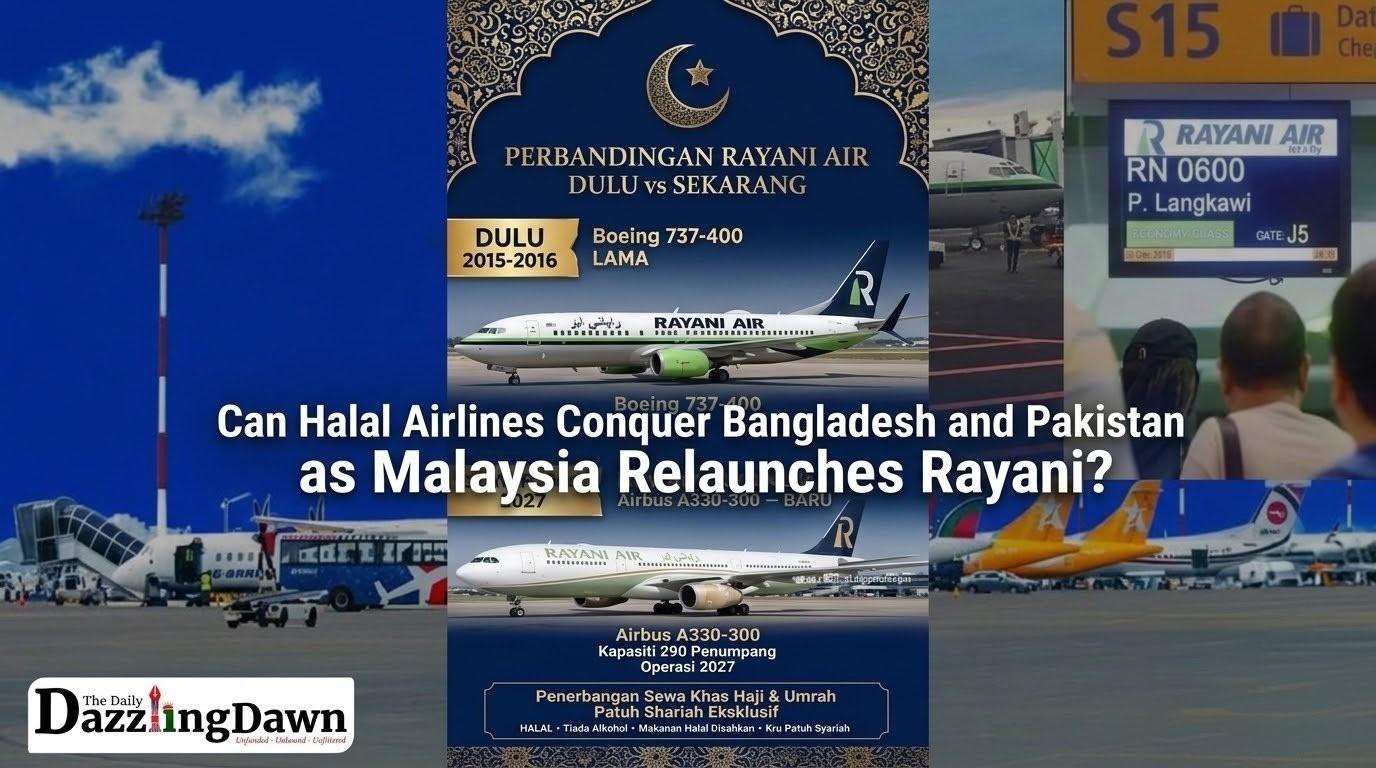
Malaysia’s pioneering Sharia-compliant carrier, Rayani Air, has formally declared its return after a decade of dormancy, rebranding as Rayani Air 2.0 HALAL with targeted charter operations scheduled to begin in 2027. The revived operator intends to deploy a widebody Airbus A330-300 exclusively for Hajj and Umrah pilgrimages to Mecca and Medina, setting up an intense commercial duel with Amal by Malaysia Airlines, the national carrier’s established, ISO-certified pilgrimage subsidiary. Yet while Southeast Asia actively refines and monetises the institutional halal aviation ecosystem, massive Muslim-majority markets in South Asia—most notably Bangladesh and Pakistan—remain largely unable to convert their colossal pilgrim demographics into dedicated, home-grown halal airline powerhouses.
Rayani Air 2.0 and the Malaysian Charter Arena
The operational pivot of Rayani Air represents a calculated survival strategy following its abrupt collapse in 2016. The original carrier was launched in December 2015 as Malaysia’s first halal-certified commercial airline, enforcing mandatory headscarves for female crew members, prohibiting onboard alcohol and pork, and broadcasting pre-flight Quranic supplications. However, attempt to wage direct price wars on scheduled domestic trunk routes against AirAsia and Malaysia Airlines led to severe operational breakdowns, delayed flights, and unpaid staff wages. The Civil Aviation Authority of Malaysia revoked its Air Operator Certificate within months over systemic safety and administrative deficiencies.
Under its 2.0 blueprint, Rayani Air has abandoned scheduled domestic connectivity to embrace long-haul religious charter services. Unlike scheduled commercial aviation, religious chartering limits regulatory fare volatility, hedges route competition, and capitalises on rigid seasonal demand tied to the Islamic lunar calendar. Nevertheless, Daily Dazzling Dawn understands that Rayani Air 2.0 enters a heavily guarded arena. Amal by Malaysia Airlines holds dominant institutional standing, backed by the parent group’s substantial long-haul fleet, Kuala Lumpur International Airport hub infrastructure, and deeply entrenched commercial contracts with Lembaga Tabung Haji, the statutory board governing Malaysian pilgrimage quotas. Daily Dazzling Dawn learned that neither the Civil Aviation Authority of Malaysia nor Lembaga Tabung Haji has formally confirmed regulatory operating permissions or seat allocations for the upstart entrant.
The South Asian Conundrum: Demographics Without Specialised Fleets
The structural developments in Kuala Lumpur bring into sharp focus why South Asian giants Pakistan and Bangladesh have failed to build comparable halal aviation brands, despite controlling far larger pilgrimage populations. Pakistan represents an annual Hajj quota of approximately 179,000 pilgrims alongside more than 1.5 million Umrah travellers each year. Similarly, Bangladesh commands an official Hajj quota exceeding 127,000 individuals, supplemented by half a million annual Umrah pilgrims.
Combined, the two nations represent one of the most lucrative religious travel corridors in global aviation, generating billions of pounds in passenger revenue. Yet neither country possesses an internationally certified, dedicated halal airline brand comparable to Amal or the emerging Rayani 2.0 model. Instead, state carriers Pakistan International Airlines and Biman Bangladesh Airlines operate ad-hoc, seasonal Hajj shuttles, losing significant market share, high-yield premium traffic, and year-round Umrah bookings to Gulf mega-carriers such as Saudia, Emirates, and Qatar Airways.
Structural Bottlenecks in Dhaka and Islamabad
The inability of Dhaka and Islamabad to capture dedicated halal aviation opportunities stems from systemic fiscal, regulatory, and infrastructural distress. Operating a dedicated widebody religious charter airline requires massive capital deployment, dollar-denominated aircraft leasing arrangements, and unhindered currency mobility. In recent years, both Bangladesh and Pakistan faced severe foreign exchange constraints, drawing formal warnings from the International Air Transport Association after blocking hundreds of millions of dollars in foreign airline revenues due to acute shortages of foreign reserves.
This chronic liquidity squeeze makes it extraordinarily hazardous for local private entrepreneurs to lease widebody aircraft such as the Airbus A330 or Boeing 777 required for long-haul pilgrimage services. Furthermore, both countries endure punitive aviation fuel taxation, exorbitant ground-handling fees at airports like Dhaka’s Hazrat Shahjalal International and Islamabad International, and protracted bureaucratic governance. National carriers have frequently struggled with fleet unserviceability, governance scandals, and international safety audits, precluding the strategic corporate agility needed to establish boutique, ISO-certified Sharia subsidiaries.
Institutional Infrastructure and the Path Forward
Malaysia’s ability to incubate and sustain Sharia-compliant aviation relies fundamentally on its financial institutional framework. Institutions like Lembaga Tabung Haji manage billions of ringgit in pilgrim savings through sovereign Islamic funds, systematically pre-purchasing airline seat capacities years in advance. In contrast, the pilgrimage ecosystems in Pakistan and Bangladesh remain fragmented across hundreds of disparate, small-scale private travel agencies, creating price volatility, administrative chaos, and frequent visa irregularities that deter institutional investors.
Unless aviation authorities in Islamabad and Dhaka enact sweeping structural reforms—liberalising jet fuel tariffs, guaranteeing foreign exchange repatriation, and establishing formal Islamic sovereign pilgrimage trusts—the multi-billion-pound religious travel corridors of South Asia will continue to be serviced by foreign Middle Eastern carriers, leaving Southeast Asia to monopolise the evolution of dedicated halal commercial aviation.





.jpg)