


.svg)
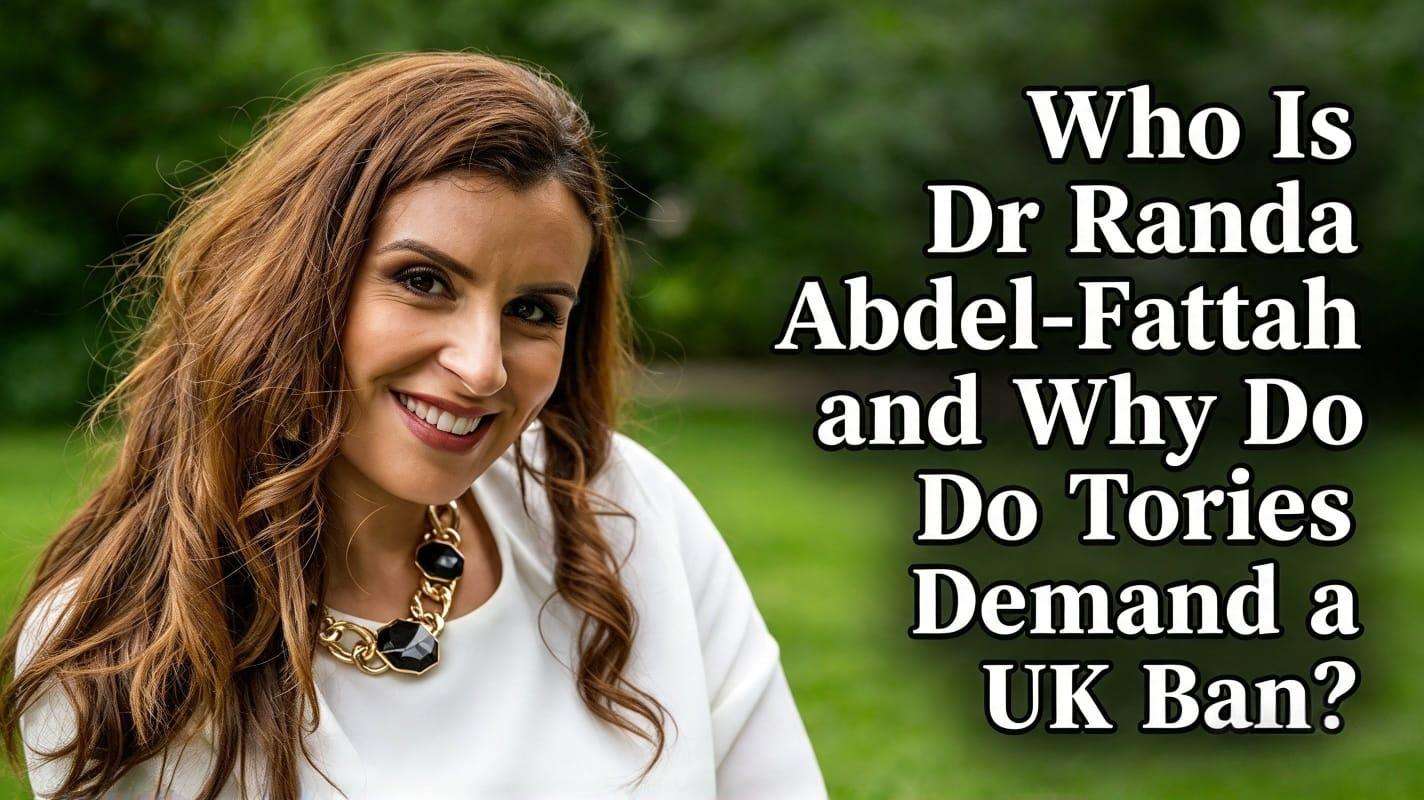
The British government faces mounting pressure from the parliamentary opposition to bar acclaimed Australian academic, author, and human rights advocate Dr Randa Abdel-Fattah from entering the United Kingdom ahead of her scheduled literary tour. Shadow Home Secretary Chris Philp submitted a formal letter to Home Secretary Shabana Mahmood on Sunday, demanding the government review her case as a matter of urgency and refuse or cancel any Electronic Travel Authorisation or entry clearance. Dr Abdel-Fattah, an award-winning novelist, sociologist, and Future Fellow at Macquarie University who has dedicated decades to researching civil society, anti-Muslim prejudice, and institutional discrimination, was scheduled to undertake six book discussions across London, Manchester, Bath, and Dublin between 30 September and 9 October to promote her Miles Franklin Literary Award-shortlisted novel, Discipline, with no events scheduled for 7 October.
Daily Dazzling Dawn understands that the Conservative frontbench intervention centres on past statements regarding the Middle East conflict, with Mr Philp arguing that foreign nationals with controversial rhetoric should face strict scrutiny under character and conduct rules. The Shadow Home Secretary pointed to remarks describing the 7 October 2023 attacks as a moment of freedom, asserting that her presence could jeopardise public order and heighten community tensions. The intervention drew backing from Jewish community bodies in Australia, with Executive Council of Australian Jewry co-chief Peter Wertheim noting acute timing sensitivities and Zionist Federation of Australia president Jeremy Leibler urging authorities to protect domestic social cohesion. In response, a Home Office spokesperson stated that the department does not comment on individual visa cases while maintaining an unequivocal stance against antisemitism.
Born in Sydney in 1979 to an Egyptian mother and a Palestinian father, Dr Abdel-Fattah was raised in Melbourne and has spent her life bridging complex legal, academic, and creative disciplines. A mother of four, she initially trained and worked as a litigation lawyer specialising in human rights and refugee advocacy, directly representing asylum seekers and vulnerable immigrants navigating Australian administrative detention. Transitioning to scholarship, she completed a doctorate in sociology at Macquarie University, examining Islamophobia, counter-terrorism impacts, and the lived realities of migrant youth. Her body of research has established her as an essential voice documenting systemic bias, giving academic authority and protection to historically under-represented communities.
Her creative career began with similar cultural resonance in 2005 through her landmark young adult debut, Does My Head Look Big in This?, which broke ground globally by offering an empathetic, witty coming-of-age portrait of an Australian teenager choosing to wear the hijab. The novel earned international honours, was translated into multiple languages, and remains a standard text on school curricula worldwide for fostering cultural understanding. Her 2025 release, Discipline, builds upon this lifelong focus on ethical responsibility by interrogating modern censorship, structural gatekeeping, and the institutional silencing faced by voices advocating on behalf of dispossessed and vulnerable civilian populations.
The Tory call for border restrictions follows a series of contested cancellations that have placed Dr Abdel-Fattah at the centre of global debates over artistic freedom and solidarity. Her novel gained widespread attention earlier this year after she was initially dropped from the 2026 Adelaide Writers’ Week on grounds of cultural sensitivity following a security incident at Bondi Beach. The removal sparked an immediate backlash, prompting more than 180 authors to withdraw in protest and causing the festival to collapse entirely despite organizers attempting to reinstate her. Previous speaking appearances at the Bendigo and Newcastle writers festivals faced similar objections from lobby groups.
More recently, Dr Abdel-Fattah faced another abrupt disruption when her scheduled November talks at Newnham College for the Cambridge Literary Festival were cancelled after inquiries from the Jewish Chronicle. Responding publicly to institutional pressures, the author urged cultural organisations to choose principle over posturing, warning that targeted campaigns to silence advocacy for Palestine threaten the bedrock of democratic inquiry. As ministers assess the opposition's exclusion request, supporters argue that Dr Abdel-Fattah’s scholarship and creative work represent an indispensable defence of civilian victims and the freedom of public expression.