





.svg)
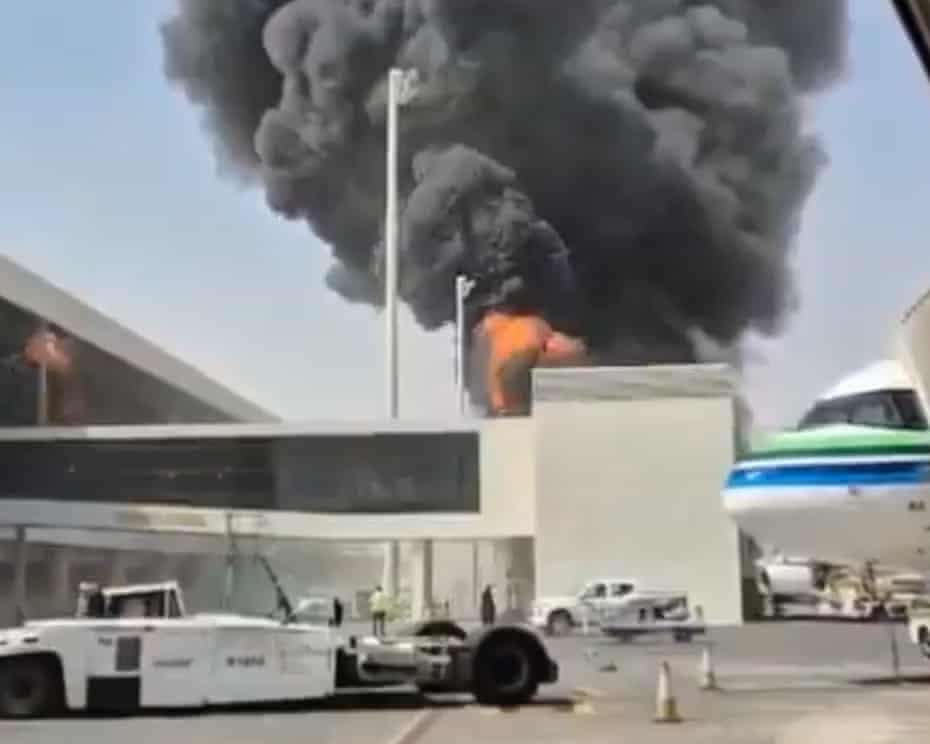
Two Bangladeshi nationals were among 12 people reportedly killed in an attack on King Khalid International Airport in Riyadh, Saudi Arabia, on Saturday, 10 October 2026, according to the kingdom’s civil aviation authority. A further 309 people were injured, some critically, as airport operations were suspended and authorities assessed the damage. The Saudi-led military coalition blamed Yemen’s Houthi movement for the attack and vowed to respond.
The incident has raised serious concerns about the safety of civilian passengers and airport workers as tensions linked to Yemen’s conflict continue to spread across the region. The reported deaths of two Bangladeshis have also drawn attention to the risks faced by the large Bangladeshi expatriate community living and working in Saudi Arabia.
Saudi authorities said the 12 fatalities included four Saudi nationals, two Bangladeshis and one person each from the United States, Jordan, Palestine, Syria, Sudan and Egypt.
The authorities have not provided further identifying details about the two Bangladeshi victims in the information supplied. Their names, ages, home districts and employment details have not been independently confirmed for this report.
The Saudi civil aviation authority said 309 people were injured in the incident, with some in critical condition. Emergency services attended the airport as officials began assessing the damage and responding to the casualties.
The deaths are a matter of concern for families in Bangladesh and for expatriates who rely on Saudi Arabia for employment and income. However, further details about the victims should be treated cautiously until confirmed by the relevant authorities or their families.
The attack reportedly struck a passenger terminal at King Khalid International Airport, one of Saudi Arabia’s principal international aviation hubs. An eyewitness who said they had been inside the domestic terminal told journalists that gate 401 had been hit and that they had seen injured people nearby.
The witness described passengers running during the incident. Reuters, citing an eyewitness, reported that more than a dozen ambulances were seen heading to the airport.
Major General Turki al-Maliki, spokesman for the Saudi-led coalition supporting Yemen’s internationally recognised government, said the attack on a passenger terminal had resulted in deaths and injuries among civilian passengers and airport staff. He described the incident as a war crime.
That description represents the coalition’s stated position. Any formal legal determination would require an assessment of the evidence by the appropriate authorities.
Airport operations were suspended while officials examined the damage and addressed the security situation. The disruption affected air travel, with airlines cancelling or diverting services to and from Riyadh.
The Saudi-led coalition has blamed Yemen’s Houthi movement for the attack and promised a response. The Houthis, who control large parts of Yemen and receive support from Iran, have previously launched attacks against Saudi targets during the long-running conflict.
The latest incident followed reports of earlier attacks affecting Riyadh’s airport. Saudi authorities said three Saudi nationals, including a pilot, had been killed in two attacks on Thursday, 8 October. The coalition also reported that a projectile fell near King Fahd International Airport in Dammam, eastern Saudi Arabia, on Saturday.
The sequence of reported incidents has heightened concerns about the security of major transport facilities across the kingdom. However, responsibility for individual attacks and the precise circumstances surrounding them should be assessed using verified evidence and official findings.
The United States condemned the recent attacks. US Secretary of State Marco Rubio also confirmed that an American citizen had been killed in the strikes, according to the supplied report.
The security situation prompted warnings to international travellers. The UK Foreign Office advised British nationals to avoid the airport area until it was secure, while Western embassies also warned their citizens to stay away.
Several Gulf airlines cancelled flights to and from Riyadh. Flight-tracking information cited in the original report showed services being diverted or cancelled, although schedules may change as the situation develops.
Passengers planning to travel through King Khalid International Airport should check directly with their airlines for the latest information and follow instructions from Saudi authorities. Travellers should not assume that a previously scheduled flight will operate as planned during a security disruption.
Saudi Arabia became directly involved in Yemen’s conflict in 2015, when it led a military coalition supporting the country’s internationally recognised government against the Houthis.
A truce brokered in 2022 helped reduce hostilities after years of fighting, but tensions have since risen again. The Houthis have said their attacks against Saudi targets are connected to Riyadh’s support for government forces in Yemen and what they describe as restrictions imposed on their territory.
The conflict has also affected security around the Red Sea and the Bab al-Mandab Strait, a strategically important maritime passage connecting the Red Sea with the Gulf of Aden. Disruption in the area can have consequences for international shipping and regional trade.
Years of fighting have caused extensive civilian suffering in Yemen and contributed to a major humanitarian crisis. Further escalation risks worsening the situation and increasing the dangers faced by civilians across the region.
Saudi authorities are assessing the airport damage, treating the injured and reviewing security arrangements. The Saudi-led coalition has promised a response, but the timing and nature of any further action remain uncertain.
For Bangladesh, confirmation of the identities of the two reported victims will be an important next step. Until official details are released, claims about their identities or family circumstances should not be treated as established facts.



.jpg)