





.svg)
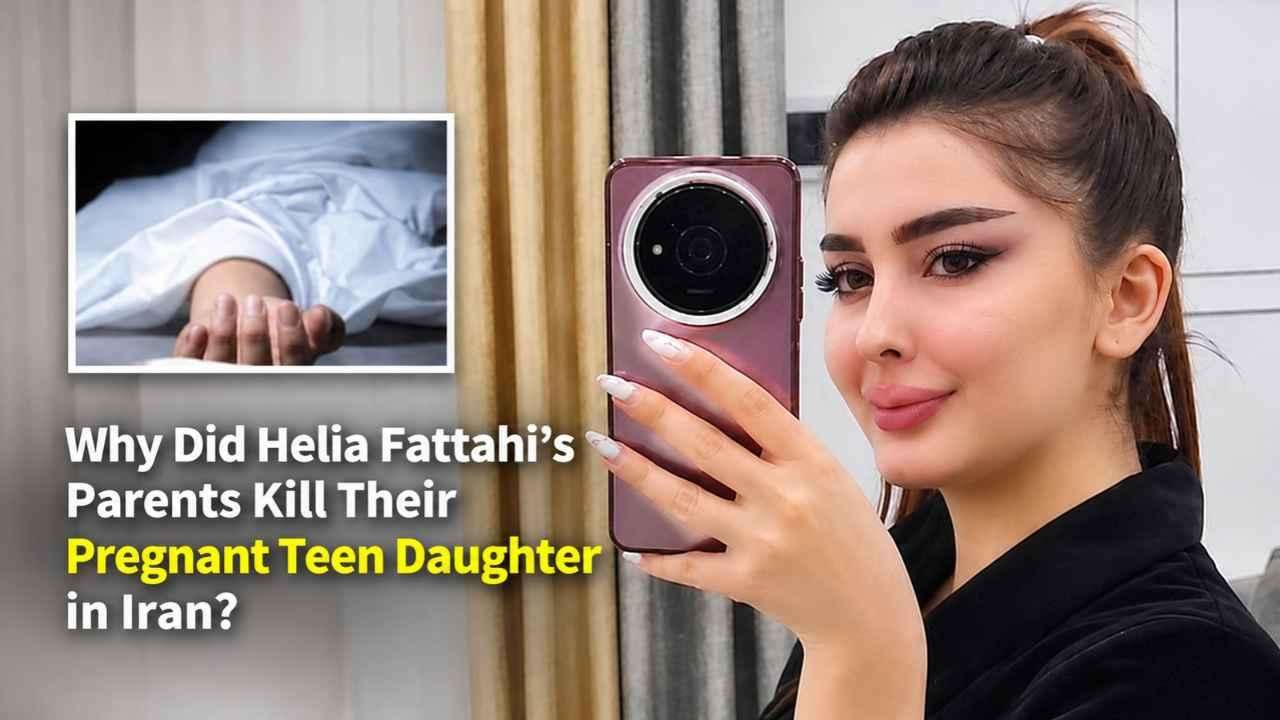
Helia Fattahi, a 19-year-old woman who was two months pregnant, was killed by her parents at her family residence in the western Iranian city of Sanandaj on Saturday, 21 November 2026, after disclosing her pregnancy to them the previous week. According to human rights monitors and local police statements, her father, Voria Fattahi, and mother, Leila Veisi, killed their daughter in the Nayser district following a dispute over perceived family honour. Shahram Abdi, head of the criminal police in Kordestan province, confirmed on Tuesday, 24 November 2026, that both parents confessed to the killing during questioning and remain in police custody.
Daily Dazzling Dawn understands from documentation compiled by the Hengaw Organisation for Human Rights and the Hana Human Rights Organisation that the teenager had become pregnant following a relationship with a young man. Earlier on Saturday, Voria Fattahi and Leila Veisi attended a local court to file a formal complaint before returning to the family home. Once inside the residence, the parents allegedly forced Helia Fattahi to swallow approximately 30 anticonvulsant tablets and subjected her to a severe physical assault. When they realised she had survived the poisoning and beating, they suffocated her with a pillow. Emergency medical personnel arriving at the property were met with confessions from both parents, while local police initially attributed the death to unspecified family disputes. While Hengaw recorded Helia Fattahi’s age as 19, the Hana Human Rights Organisation separately noted her age as 16 in its initial dispatches.
The killing of Helia Fattahi represents the third high-profile fatality involving a young woman or girl across Iran within a ten-day span in November 2026, intensifying public scrutiny ahead of the International Day for the Elimination of Violence Against Women on 25 November. Three days prior to the Sanandaj incident, on Wednesday, 18 November 2026, 23-year-old Sadaf Haghbin was fatally shot during her birthday celebration in the northern province of Gilan. Local outlets, including the Khabaronline news website, reported that a former partner carried out the shooting after Haghbin refused his marriage proposal.
Earlier that same week, on Sunday, 15 November 2026, residents discovered the body of 16-year-old schoolgirl Sogand Sayyadi in the courtyard of her apartment building in Kermanshah, western Iran. Daily Dazzling Dawn learned from regional rights observers that the student had explicitly warned staff at Razvan Girls’ High School the previous day that returning home with her father, Kioumars Sayyadi, would place her life in immediate danger. Administrators had reportedly summoned her father to the school upon learning she had been in contact with a prospective suitor whom he opposed. Following a violent confrontation in front of classmates and staff—and a further assault outside the building—her father allegedly threw her from the fifth floor of their residential block the next day.
Provincial chief prosecutor Hamidreza Karimi confirmed via the judiciary-affiliated Mizan news agency that Kioumars Sayyadi was detained on suspicion of assault and murder, while the school principal was arrested on suspicion of negligence. Although Kermanshah’s education department stated that the father had visited the school solely to collect academic records for a transfer to Gilan-e Gharb, rights groups noted that Sayyadi had lived with her father and stepmother since her parents’ separation and had been barred from contacting her mother.
These fatalities reflect a wider pattern of gender-based violence documented by independent monitoring networks throughout 2025 and 2026. Figures compiled by Iran International indicate that at least 84 women and girls were killed across Iran between 21 March and 13 October 2026, with perpetrators known to the victims in 75 of those cases, including eight underage girls killed by fathers, brothers, or other blood relatives. Furthermore, records maintained by the Hengaw Organisation for Human Rights show at least 207 femicides occurred nationwide in 2025, comprising 31 cases linked directly to suspected honour motives, alongside 13 women killed after rejecting marriage proposals, ten after seeking divorce, and ten child marriage victims killed by their husbands.
In late October 2026, 16-year-old 11th-grade pupil Nesa Alizadeh was strangled by her father in Kalvans village, located in West Azerbaijan Province’s Khoy County, following a dispute over her choice of marriage partner. Sources familiar with the investigation told to journalists that Nesa had left home several days earlier after her relatives opposed her chosen match, only to be forcibly returned by family members. On 29 October 2026, her father strangled her and attempted to arrange a hasty burial. Suspicious police officers intervened and ordered a forensic post-mortem examination, which confirmed death by strangulation, leading to the father’s arrest and confession after Nesa’s mother filed a formal complaint.
Human rights advocates and legal analysts emphasise that the persistence of honour-motivated killings is closely tied to statutory gaps within Iran’s judicial framework. Legislation designed to protect women and girls from domestic violence has remained stalled in the Iranian parliament for over a decade, leaving at-risk citizens without state-backed shelters or enforceable restraining orders.
Crucially, Iran’s Islamic Penal Code does not specifically criminalise honour crimes and instead grants substantial statutory leniency to male relatives. Under Article 301 of the code, fathers and paternal grandfathers are legally exempt from qisas—the principle of retaliatory capital punishment—when convicted of killing their own children or grandchildren. Consequently, while non-honour-related homicides carry the death penalty, perpetrators of paternal honour killings typically receive prison sentences of between three and ten years. Independent researchers estimate that at least 450 honour killings take place annually across Iran, though analysts warn that under-reporting and misclassification as suicides or domestic accidents obscure the true scale of the crisis.




.jpg)