



.svg)
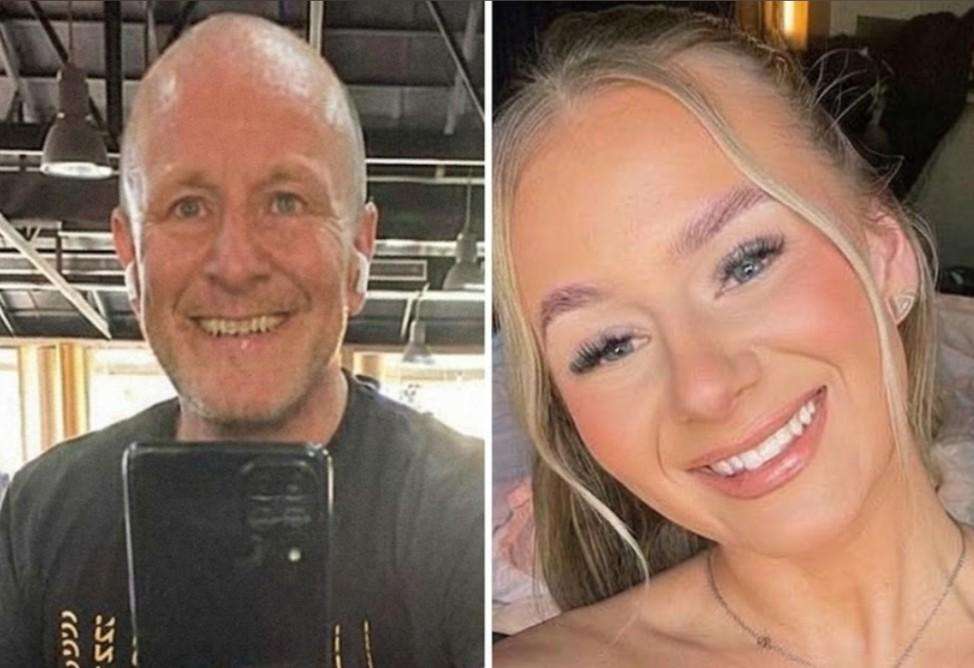
Cheshire Constabulary has formally notified Jane Coates, the mother of 23-year-old British national Lucy Harrison, that British law enforcement lacks the lawful authority to investigate or prosecute her daughter's fatal shooting in Prosper, Texas, following the incident on 10 January 2025. Despite a British coroner recently recording a conclusion of unlawful killing at a UK inquest, and explicit statutory provisions under Section 9 of the Offences Against the Person Act 1861 that theoretically allow British citizens to stand trial in England and Wales for homicides committed overseas, senior officers in Warrington confirmed that practical and sovereign barriers halt domestic intervention. Speaking to Daily Dazzling Dawn, legal observers noted that because primary physical evidence, witnesses, and the suspect—52-year-old British expat Kris Harrison—remain exclusively within the jurisdiction of Collin County, United States authorities retain sole investigative control after a Texas grand jury previously declined to issue a criminal indictment.
The legal deadlock centres on a stark divergence between the British coronial system and American prosecutorial procedure. When the body of a British citizen is repatriated to England or Wales following a violent or unnatural death abroad, the Coroners and Justice Act 2009 mandates that the senior coroner for that jurisdiction conduct an independent statutory inquest. Unlike a criminal trial, a British inquest is an inquisitorial, fact-finding process tasked with establishing who the deceased was, and how, when, and where they came by their death. Following the recent conclusion of unlawful killing in England, expectations rose that domestic authorities might invoke extraterritorial jurisdiction.
Under English law, the Offences Against the Person Act 1861, alongside the Domestic Abuse Act 2021, grants courts in England and Wales extraterritorial jurisdiction over murder and manslaughter committed by British subjects anywhere in the world. However, converting a coroner's finding into a viable Crown Prosecution Service indictment requires admissible evidence gathered in accordance with the Police and Criminal Evidence Act 1984. In correspondence that Daily Dazzling Dawn learned was sent to the victim's family, Deputy Chief Constable Mike Evans of Cheshire Constabulary explained that British officers possess no statutory power to compel witness testimony, seize forensic exhibits, or execute search warrants on American soil without a formal Mutual Legal Assistance treaty request initiated and approved by the United States Department of Justice.
The family's petition for British police intervention stems from acute dissatisfaction with the initial probe conducted by the Prosper Police Department and the Collin County District Attorney's Office. Lucy Harrison was fatally struck in the chest inside the master bedroom of her father's detached residence in the Dallas-Fort Worth metroplex shortly before she was scheduled to depart for an international return flight to the United Kingdom. Her father maintained that the firearm discharged accidentally while he was showing the weapon to his daughter, and local officers treated the fatality as an accidental discharge from the outset without making an arrest.
However, an independent case review conducted by Craig Miller, a former Chief of Police in Dallas who now serves as an American law enforcement expert witness, identified substantial departures from nationally accepted homicide investigation protocols. Daily Dazzling Dawn understands that attending officers documented smelling alcohol on Kris Harrison immediately following the shooting, yet investigators failed to request mandatory blood toxicology screenings or breathalyser tests. Furthermore, forensic technicians did not administer gunshot residue testing on the hands or clothing of those present in the bedroom, nor did they conduct comprehensive ballistic trajectory reconstructions to reconcile the angle of the entry wound with the father's account of how the weapon was handled.
"These are not minor errors or omissions. They are fundamental to any homicide investigation and they simply weren't done," Jane Coates told to journalists after travelling more than 4,000 miles to confront prosecutors at the Collin County District Attorney's Office in McKinney, Texas. "The very least I thought I could expect was for the people responsible for investigating her death to give me the courtesy of sitting down with me and hearing me out."
Representing the family and the Justice for Lucy Harrison campaign, legal adviser Radd Seiger argued that Cheshire Constabulary should proactively collate domestic evidence and formally liaise with American counterparts to challenge the grand jury's decision. In Texas, a "no-bill" finding by a grand jury indicates that jurors determined there was insufficient probable cause to bring formal criminal charges based on the evidence presented by the district attorney at that time. Crucially, because jeopardy does not attach during grand jury proceedings under the Fifth Amendment of the United States Constitution, the Collin County District Attorney retains the legal authority to resubmit the case to a newly impanelled grand jury if material new evidence or forensic analysis is uncovered.
Despite the theoretical availability of a fresh grand jury presentation, both the Prosper Police Department and the Collin County District Attorney's Office have declined repeated requests for face-to-face meetings with the bereaved mother, maintaining in official statements that their initial investigation was thorough and complete. Deputy Chief Constable Evans noted in his assessment that while Cheshire Constabulary understands the family's desire for further scrutiny, English police forces cannot unilaterally override the prosecutorial discretion of a foreign sovereign state.
"You do not need to be a lawyer or police officer to spot the terrible gaps in the investigation," Radd Seiger told to journalists during a series of public engagements in Dallas aimed at prompting local civic oversight. While Daily Dazzling Dawn understands that the family's legal team is evaluating further administrative appeals in both jurisdictions, any substantive reopening of the criminal file remains entirely dependent on either the Collin County District Attorney authorizing a secondary forensic review or federal authorities intervening to facilitate cross-border evidentiary cooperation.