





.svg)
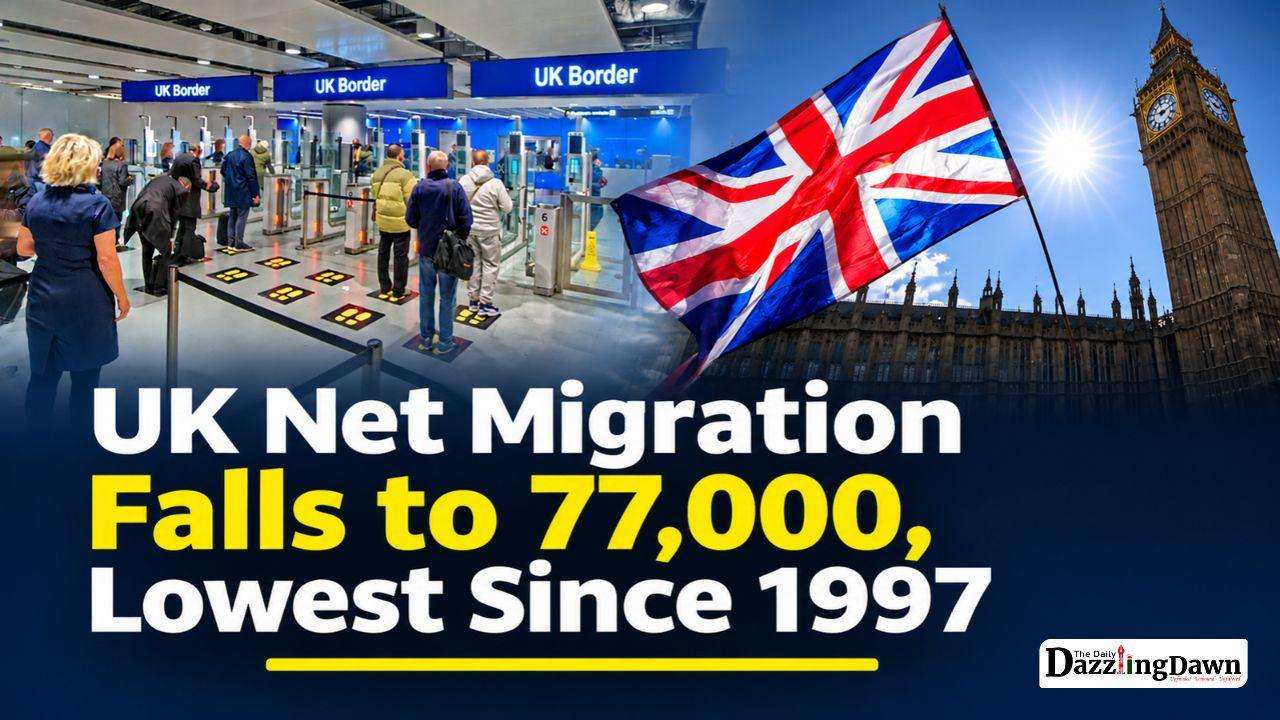
UK net migration fell to 77,000 in the year ending June 2026, marking its lowest level since 1997 outside the Covid-19 pandemic, according to the latest figures from the Office for National Statistics (ONS). The figures, published on 26 November 2026, show a 92% decline from the record estimate of 944,000 recorded in the year ending March 2023, alongside a fall in asylum applications and a significant rise in applications for British citizenship.
Poundland Collapses, 11,000 Jobs at Risk
The latest statistics indicate a substantial change in the UK's migration patterns, with fewer people arriving than in previous years and more people leaving the country. However, separate Home Office figures reveal that demand for asylum remains above historical levels, while applications for British citizenship continue to increase.
The ONS estimates that 738,000 people moved to the UK from overseas in the year ending June 2026, while 661,000 people emigrated from the country.
The difference between these two figures resulted in net migration of 77,000, representing a sharp reduction compared with recent years.
Net migration measures the difference between the number of people entering a country and those leaving it over a specified period. It is an important indicator used by the government to assess population changes, migration trends and their potential impact on public services, housing and the labour market.
The latest estimate represents a dramatic departure from the exceptionally high levels recorded after the pandemic. Net migration reached 944,000 in the year ending March 2023, driven partly by increased arrivals from outside the European Union, including people coming to work and study, alongside humanitarian migration.
The latest figures suggest that the increase experienced during the post-pandemic period has largely reversed.
Separate Home Office statistics show that 74,000 people claimed asylum in the UK during the year ending September 2026, a 33% reduction compared with the previous 12-month period.
The Home Office attributed much of the decline to fewer applications from people arriving through illegal entry routes.
Despite the reduction, asylum applications remain higher than the levels recorded between 2004 and 2021, indicating that pressure on the UK's asylum system has not returned to its earlier historical range.
Illegal entry routes continued to represent the most common way for people claiming asylum to reach the UK, accounting for just under half of all asylum seekers during the reporting period.
The figures are particularly significant for the government's immigration policy, which has placed considerable emphasis on reducing irregular migration, tackling people-smuggling networks and strengthening border controls.
The decline in asylum applications may ease some pressure on the system, although the number of people requiring accommodation and decisions on their protection claims remains an important challenge for the Home Office.
While net migration and asylum applications have declined, applications for British citizenship have moved in the opposite direction.
The Home Office recorded 320,000 applications for British citizenship in the year ending September 2026, representing a 17% increase compared with the previous year.
The department described the figures as part of an upward trend that has continued since 2016.
The number of people granted British citizenship also increased, rising by 10% to 265,000 over the same 12-month period.
Although this represents a substantial increase, the number of citizenship grants remains slightly below the record level recorded in the year ending December 2024.
Indian and Pakistani nationals continued to make up the largest groups of people granted British citizenship, highlighting the continuing significance of South Asian communities in the UK's migration and naturalisation statistics.
The contrasting figures present a complex picture of migration in Britain. Net migration has fallen sharply, asylum applications have decreased, but demand for British citizenship has reached an unprecedented level.
The distinction between these statistics is important. Net migration measures the overall movement of people into and out of the country, whereas asylum applications and citizenship applications represent separate stages and categories within the immigration system.
A fall in net migration does not necessarily mean that fewer people are seeking permanent settlement or British nationality. People who have already lived in the UK for several years may become eligible to apply for citizenship, even as the number of new arrivals declines.
For policymakers, the figures raise questions about the longer-term effects of changing migration patterns on the British economy, workforce availability, population growth and public services.
Employers in sectors that depend on overseas recruitment may also be affected by changing migration levels, while the continued rise in citizenship applications demonstrates that demand for permanent membership of British society remains strong.
Daily Dazzling Dawn understands that the latest ONS and Home Office figures provide an important statistical snapshot of the UK's changing immigration landscape. The coming months will show whether the decline in net migration continues and whether the reduction in asylum applications is sustained.