





.svg)
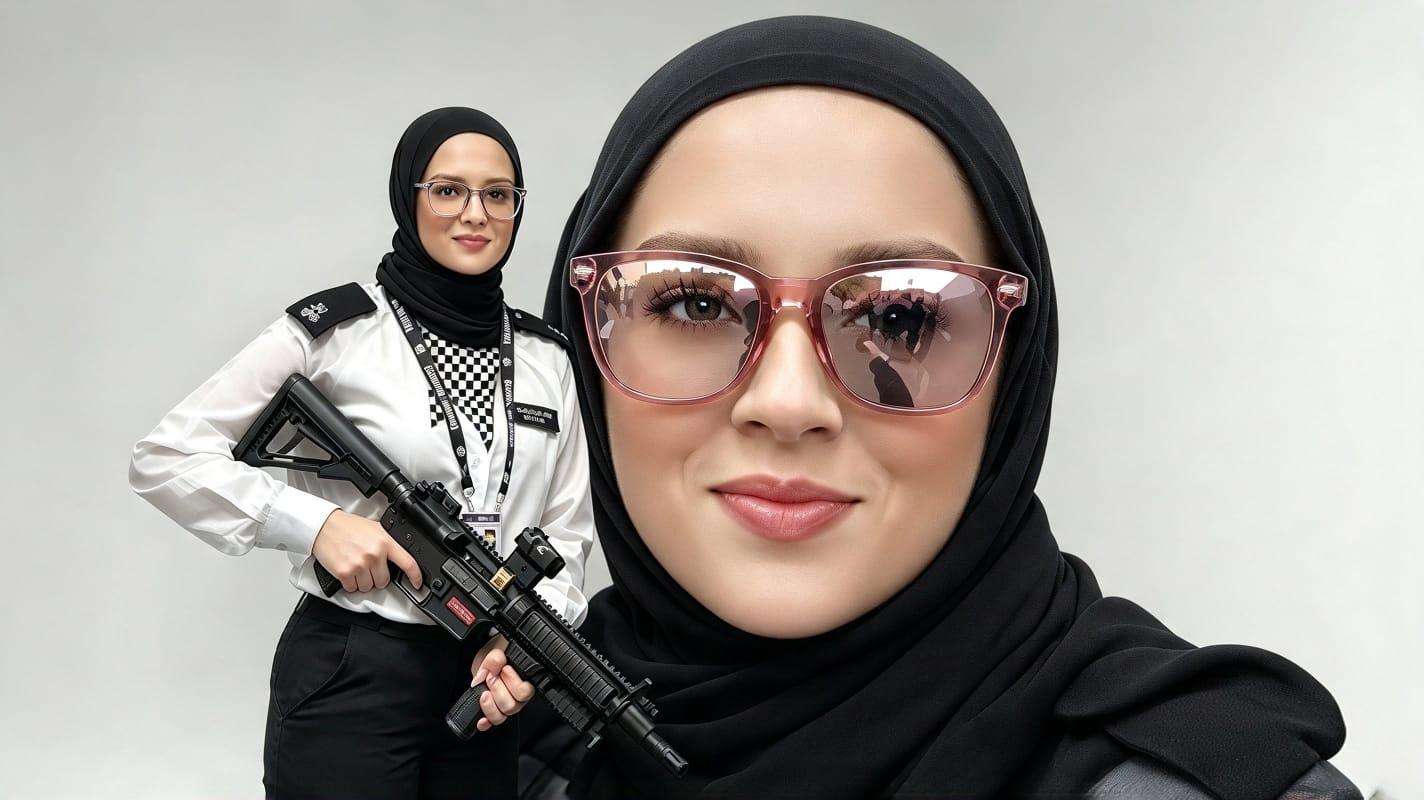
The British Muslim Trust chief executive Akeela Ahmed warned on 24 October 2026 that the racist and misogynistic online abuse directed at Metropolitan Police Constable Fiona Shaik Umar exposes a severe rise in prejudice across the United Kingdom. Following PC Umar’s recognition with the Outstanding Contribution to Women in Policing Award at the Police Federation annual conference on Wednesday, online trolls targeted the London-based officer with manipulated artificial intelligence imagery depicting her in a suicide vest. Metropolitan Police Commissioner Sir Mark Rowley and Metropolitan Police Federation Chair Paula Dodds publicly condemned the hostility, while new national research indicates that anti-Muslim offences now represent 45 per cent of all religiously motivated hate crimes in Britain.
Behind the public outcry stands a dedicated officer with substantial academic and operational credentials in British law enforcement. According to verified professional records examined by Daily Dazzling Dawn, PC Fiona Shaik Umar holds a Bachelor of Science with Honours in Professional Policing and is an alumna of the University of East London. Operating across the London area, she has accumulated more than five years of frontline experience as a Public Safety Officer within the Metropolitan Police Service. During her tenure of over five years with the force, she progressed from the rank of Police Constable to serve as the Women’s Lead for the Association of Muslim Police.
Her decision to enter law enforcement was directly shaped by her personal life as a mother and her commitment to improving ethnic and religious representation. Daily Dazzling Dawn understands that PC Umar never initially considered a career in policing until her young daughter asked whether women who looked like her were permitted to perform the job. Offended by the realisation that her child had never seen a visibly Muslim woman serving as a police officer, PC Umar joined the Metropolitan Police to establish an inclusive path for minority women across the United Kingdom. Her leadership on the Hijab Project subsequently reformed official Metropolitan Police uniform standards to accommodate Muslim female officers.
The celebration of PC Umar’s uniform reforms was quickly overshadowed when the Police Federation’s social media announcement drew severe racist and anti-Islamic vitriol. Speaking to journalists on BBC Radio 4’s PM programme, Commissioner Sir Mark Rowley noted that female officers from minority ethnic backgrounds face a disproportionate volume of digital hostility. Daily Dazzling Dawn learned that the online harassment escalated to extremists circulating an artificial intelligence-generated photograph placing explosives on the decorated officer.
Paula Dodds, Chair of the Metropolitan Police Federation, issued a formal statement standing in solidarity with Sir Mark Rowley and describing PC Umar as an extraordinary officer whose courage far exceeds that of anonymous online offenders. Speaking to Daily Dazzling Dawn about the wider implications of the case, civil society analysts noted that digital platforms have increasingly become primary vectors for targeted misogyny and religious bigotry against public servants.
In an assessment published on Saturday morning, Akeela Ahmed, Chief Executive Officer of The British Muslim Trust, contextualised PC Umar’s ordeal within a broader national pattern. Research compiled by The British Muslim Trust reveals that 56 per cent of British Muslims experienced prejudice over the past twelve months, driven in part by the fact that one in six UK residents hold hostile attitudes toward Muslim citizens. Overall anti-Muslim hate crime has risen by 15 per cent over the past year, accounting for 45 per cent of all religious hate offences recorded nationwide.
Public misconceptions frequently fuel this hostility, particularly surrounding religious attire. Data indicates that over 40 per cent of the British public erroneously believe Muslim women are coerced into wearing the hijab, overlooking the reality that many women independently choose the garment as an expression of faith, personal agency, and community identity.
The hostility documented online frequently manifests as physical intimidation in public spaces, where one in four British Muslims report experiencing direct prejudice. Women wearing visible religious garments bear the primary brunt of these encounters. In one recent case documented by support services, a young woman wearing a niqab was verbally abused and threatened with death immediately upon boarding a public bus. The male passenger demanded she remove her face veil before advancing toward her to initiate a physical assault, prompting a bystander to intervene.
Religious institutions face parallel vulnerabilities, with data confirming that a British mosque comes under attack on average once every five days through arson, stabbings, protests, or criminal damage. On the evening of 7 March 2026, during the opening week of Ramadan, a man armed with a large spanner shattered the windows of a mosque in Scotland while mothers and children gathered inside for iftar. Despite immediate emergency reports, local police informed the congregation that officers would not attend the scene for several days. Despite these challenges and recurring rhetoric telling minority citizens to leave the country, nearly three-quarters of British Muslims maintain that the United Kingdom remains a good place to live, prompting urgent calls from The British Muslim Trust for decisive policing and strict social media regulation.

.jpeg)