




.svg)
At least 30 people have been reported killed after two high-speed trains collided in central Spain, with fears that the death toll could rise as emergency crews continue rescue operations.
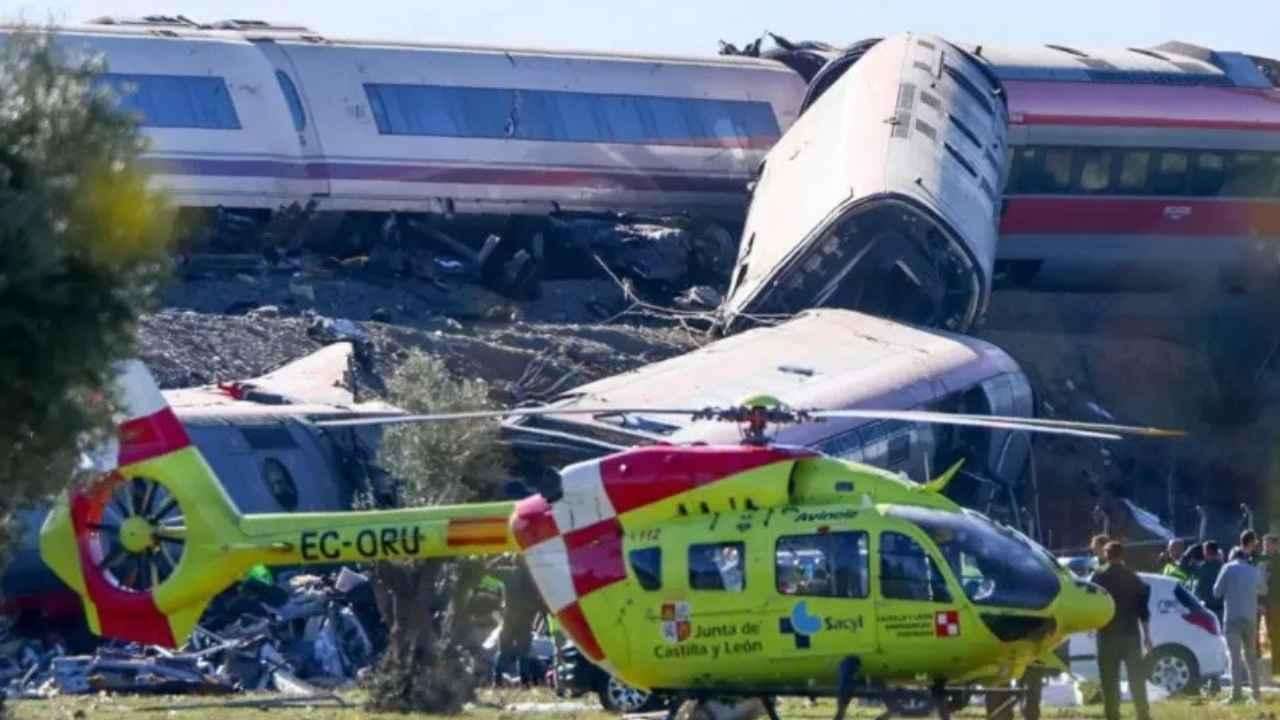
Two high-speed trains collided near Urda in Toledo province, south of Madrid, on Wednesday morning, 28 October, causing carriages to derail and leaving numerous passengers injured. Regional authorities initially confirmed at least 10 deaths before later reports raised the toll to at least 30. Some media reports put the figure higher, but the final number remains subject to official confirmation.
The collision involved a train operated by Spain’s state-owned Renfe and another run by private operator Iryo. Both trains were travelling along the high-speed corridor linking Madrid with southern Spain.
Regional authorities said the Renfe train was carrying 397 passengers, while the Iryo service had 147 passengers on board, including a baby. More than 500 people were therefore travelling on the two trains when the crash occurred.
According to preliminary reports, one train struck the rear of another that had stopped. The impact caused carriages to leave the tracks, with some reportedly tumbling down an embankment.
The precise circumstances surrounding the collision have not yet been established, and investigators will need to determine what led to the crash.
Firefighters, paramedics, police and other emergency personnel were deployed to assist passengers, treat the injured and search the wreckage. Medical helicopters and mobile intensive care units were also sent to the area.
Local authorities worked to arrange facilities for affected passengers, while hospitals prepared to receive casualties. The scale of the damage raised concerns that further victims could be found as rescue operations progressed.
A 17-year-old passenger, identified by Spanish broadcaster Cadena SER as Eduarda, described scenes of panic and confusion following the impact. She said she heard people screaming and saw casualties trapped beneath the trains.
Her account reflected the difficult conditions faced by passengers and emergency teams at the crash site.
Spain’s rail infrastructure operator, Adif, confirmed that high-speed services on the Madrid–Andalusia line had been suspended following the collision.
Renfe also reported disruption to services connecting Madrid, Ciudad Real and Andalusia, leaving travellers waiting for information at railway stations.
The suspension affected a major transport corridor linking the Spanish capital with destinations in the south. Passengers were advised to follow updates from the rail operators as the emergency response continued.
Spanish Prime Minister Pedro Sánchez said he was shocked by the serious accident and remained in contact with the transport minister and the president of the Castilla-La Mancha region.
He expressed solidarity with those affected and their families, while emergency services continued their work at the scene.
Political leaders cancelled planned engagements as authorities focused on the response to the disaster.
Although early reports suggested that one train had struck a stationary train from behind, authorities had not announced a definitive cause in the initial reports.
Any suggestion of signalling problems or human error remains unconfirmed and should not be treated as an established finding until the investigation provides further evidence.
The collision has renewed concerns about railway safety in Spain, particularly following another deadly train disaster earlier in 2026. The previous accident near Adamuz in Córdoba province killed dozens of people and prompted renewed scrutiny of the country’s high-speed rail network.
Rescue operations and efforts to establish the full circumstances of Wednesday’s collision are continuing. Authorities are expected to provide further information as the casualty figures and investigation develop.





.jpg)


 Near Durham.jpg)