





.svg)
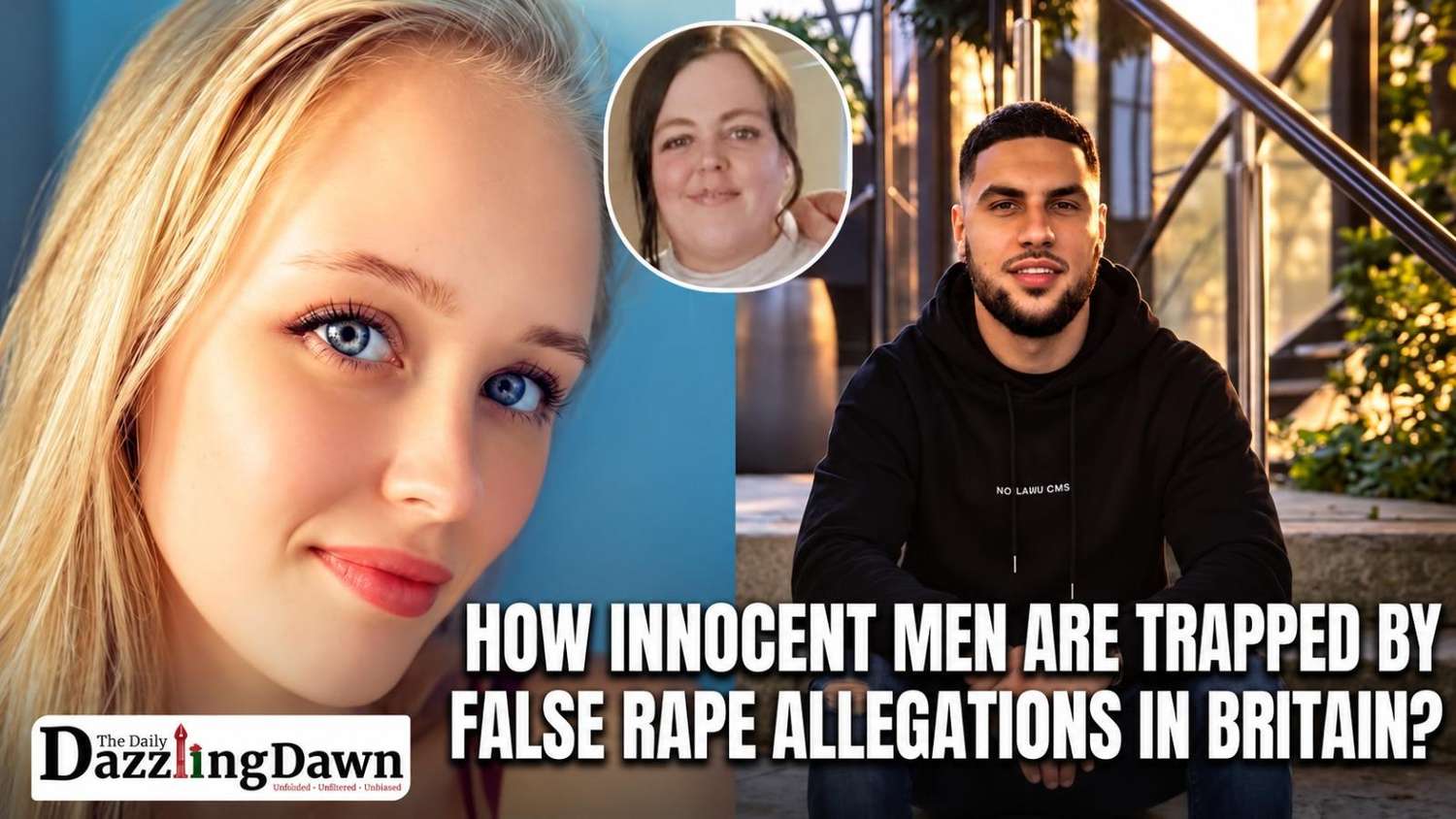
Innocent men across the United Kingdom face severe legal, psychological, and reputational ruin from fabricated sexual offence allegations, premature police detentions, and unverified social media accusations. While Home Office and Ministry of Justice research indicates that confirmed false reports represent between three and four per cent of all recorded sexual offences, recent criminal proceedings in Cheshire, Cumbria, and County Down demonstrate how rapidly an uncorroborated claim can dismantle an innocent citizen's liberty and livelihood. Speaking to Daily Dazzling Dawn, legal reform advocates warned that the absence of rigorous pre-arrest evidential scrutiny continues to trap law-abiding men inside a criminal justice framework that frequently prioritises immediate detention over objective investigation.
Read Also: Did Phone Footage Save Good Samaritan Salim Ullah From Wrongful Jail?
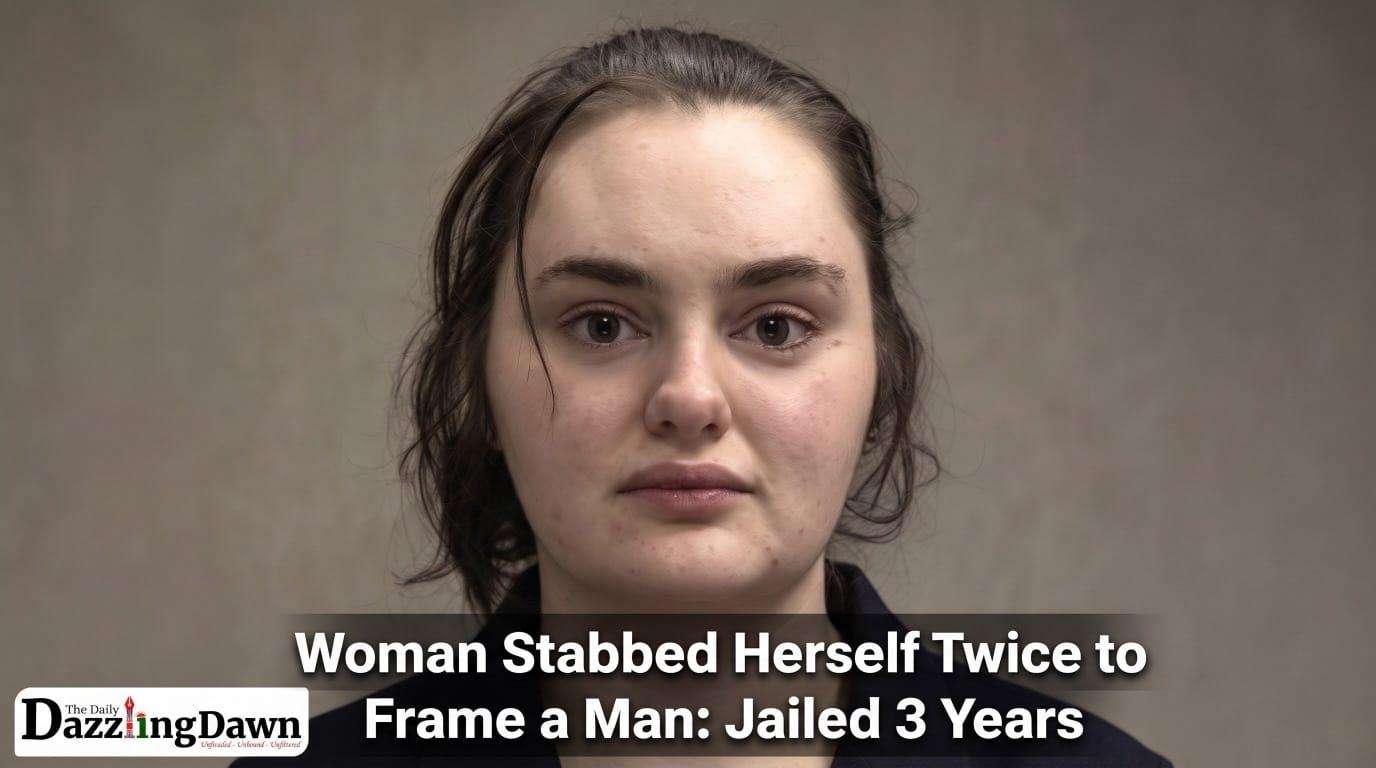
The systemic vulnerability of innocent men was starkly illustrated at Chester Crown Court when Rachael Jones received a two-year prison sentence for perverting the course of justice. Rather than functioning merely as an isolated miscarriage of goodwill, the case of 33-year-old Stoke-on-Trent motorist Salim Ullah serves as a primary legal precedent regarding the mechanics of wrongful arrest. After Mr Ullah offered Jones a safe drive home to Hassall Green in April 2022, her fabricated report of a 45-minute abduction and assault resulted in his immediate arrest, thirty hours of custodial detention, and invasive forensic procedures. Because neighborhood suspicion persisted even after his smartphone video recording exonerated him, Mr Ullah and his pregnant wife were ultimately forced to relocate from their family home.
Advocacy organisations including Facing Allegations in Contexts of Trust (FACT), presided over by Harvey Proctor, alongside the False Allegations Support Organisation (FASO), argue that policing protocols remain fundamentally flawed despite historical judicial warnings. Following the collapse of the Carl Beech investigation, Sir Richard Henriques issued comprehensive recommendations instructing police forces to abandon the automatic presumption of guilt and conduct neutral pre-arrest inquiries. However, legal analysts told to journalists that officers routinely bypass voluntary interviews in favour of high-profile domestic arrests. Furthermore, whilst individuals convicted of sexual offences face lifelong placement on the Violent and Sex Offender Register, restricting employment, banking, and travel, those convicted of perverting the course of justice face no equivalent statutory registry upon release.
Beyond formal police complaints, digital platforms have emerged as a secondary arena where unfounded sexual allegations inflict immediate trauma on innocent men. At Newtownards Magistrates Court in County Down, District Judge Amanda Brady handed a three-month prison sentence, suspended for twelve months, to 42-year-old Tammy Sproule of Lysander Park, Newtownards. Daily Dazzling Dawn learned that Sproule admitted sending a grossly offensive and menacing message via a public electronic communications network after branding a named man a paedophile on a group TikTok forum.
Prosecution counsel confirmed that the victim attended Musgrave Street Police Service of Northern Ireland (PSNI) station on 10 January 2026, presenting digital screenshots and testifying that the public accusation had caused severe psychological distress. During police questioning, Sproule initially expressed zero remorse and stated she would repeat the offence. Defence solicitor Hugh Edgar informed the court that Sproule had previously raised a complaint regarding Snapchat communications that police declined to pursue. Imposing a two-year restraining order prohibiting Sproule from contacting the victim or referencing him on social media, Judge Brady emphasised that such grave public allegations carry devastating consequences for the targeted individual.
The impact of unsubstantiated allegations is frequently compounded when ethnic minority men are targeted, as accusers exploit entrenched societal prejudices to lend credibility to fabricated narratives. In Mr Ullah's ordeal, Jones specifically invented two additional Pakistani assailants to bolster her emergency call. Academic research by the Council for European Studies and Sharmila Parmanand, Assistant Professor at the London School of Economics, highlights how historical stereotypes casting Black, Asian, and minority ethnic men as inherent threats prime both the public and law enforcement to accept accusations without scepticism.
This vulnerability is heightened by polarised political debates surrounding crime data. While Conservative Shadow Justice Secretary Robert Jenrick and Reform UK Chair Zia Yusuf have cited Centre for Migration Control figures regarding foreign nationals and sexual offence charges, Metropolitan Police and Ministry of Justice records demonstrate a substantial disparity between initial charges and actual convictions, with 14,242 defendants proceeded against in 2024 resulting in 8,098 convictions. Furthermore, UK policing data from 2019 to 2020 reveals that Black men were nine times more likely, and Asian men twice as likely, to face stop-and-search interventions than White citizens, whilst forensic psychiatrist Frank Urbaniok has noted that criminal propensity stems from individual social dissociation rather than nationality.
Public attitudes across Great Britain reflect deep contradictions regarding the severity and prevalence of false accusations, alongside landmark prosecutions such as the eight-and-a-half-year sentence handed to Eleanor Williams at Preston Crown Court for fabricating multiple rape allegations. While academic analysis by Lisa Lazard, Senior Lecturer in Psychology at The Open University, notes that European and United States studies place false reporting rates between two and six per cent—often complicated by administrative "no crime" police logging—public anxiety remains substantial.
According to demographic research by YouGov and analyst Beth Mann, 74 per cent of Britons believe false rape claims represent only a small fraction of reports, whereas 16 per cent believe half or more are untrue, a view held by 20 per cent of men compared to 11 per cent of women. Crucially, Daily Dazzling Dawn understands that while 61 per cent of the British public consider falsely accusing an innocent person of rape to be just as serious as the offence of rape itself—and 14 per cent view it as more serious—only 16 per cent support prison sentences of ten years or more for false accusers, compared to 57 per cent who demand decade-long sentences for convicted rapists. Until Parliament establishes a specific statutory offence of making a false criminal allegation and enforces balanced pre-charge anonymity for suspects, legal experts warn that innocent men will remain exposed to life-altering harm.