


.svg)
US President Donald Trump repeatedly described Abdul El-Sayed as a jihadist, while his Republican opponent questioned his loyalty to America. Campaign advertisements also attempted to link him to terrorist groups and warned voters that he would introduce Sharia law in Michigan if elected.
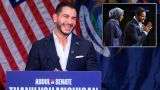
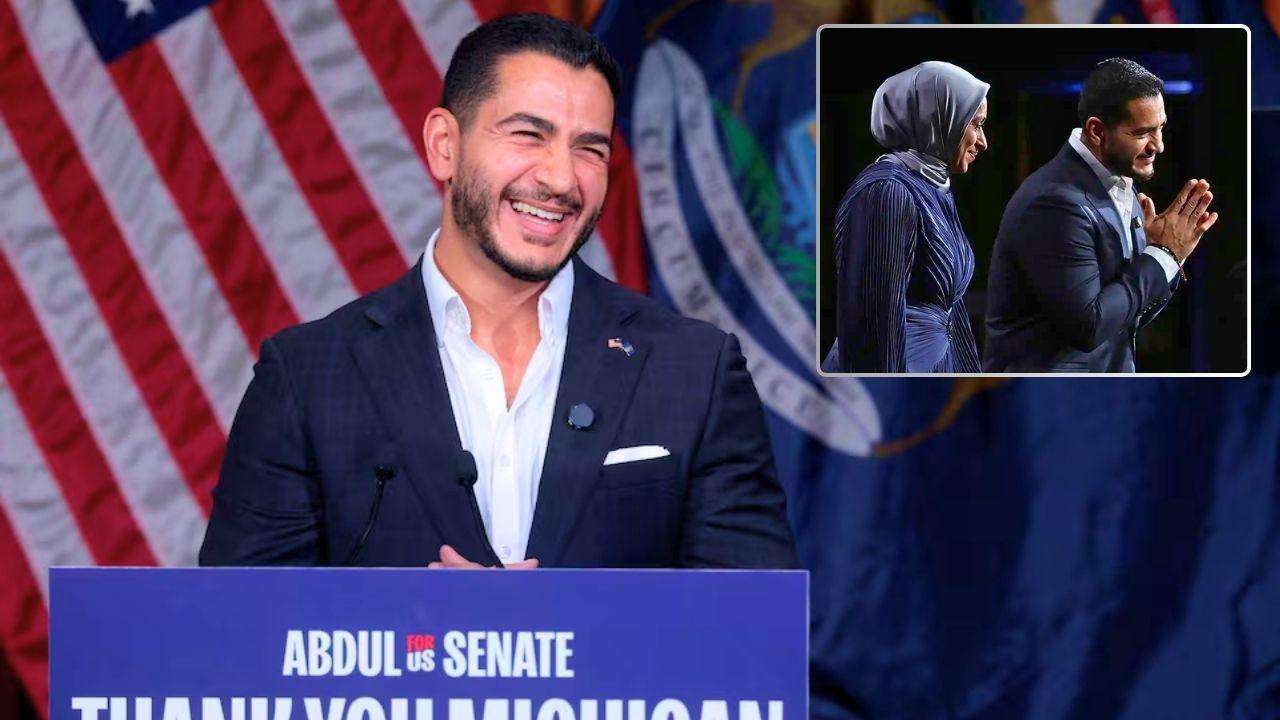
Before making history as the first Muslim elected to the US Senate, El-Sayed faced what critics described as one of the most openly Islamophobic election campaigns in recent American political history.
Despite the attacks, he secured victory. El-Sayed described his success in Tuesday's midterm elections as a rejection of the hostile rhetoric, accusing his Republican opponent, Mike Rogers, of running what he called an unusually aggressive and hate-driven campaign.
"You chose hate, and Michigan chose hope," El-Sayed declared during his victory speech.
The attacks became a major feature of the election campaign and raised concerns about the safety of residents in and around Dearborn, which is home to one of the largest Arab American communities in the United States. Local officials and residents shared their concerns about the impact of the rhetoric this week.
El-Sayed, 42, is a Michigan-born Egyptian American with a medical degree who previously served as Detroit's health director. During his campaign, he focused on progressive policies, particularly healthcare and the rising cost of living.
David Kolar, a 32-year-old music teacher, said the focus on El-Sayed's religious beliefs reminded him of the discrimination Muslims experienced following the September 11, 2001, terrorist attacks. He believed the country had moved beyond that period.
"We have freedom of religion, and if he is of the Muslim faith, so be it," Kolar said after voting for El-Sayed in Warren, a suburb of Detroit.
Rogers maintained that his criticism of El-Sayed was based on political differences rather than religion. However, he repeatedly presented his opponent as a potential national security threat and appeared alongside Republican figures who made even stronger accusations.
Among the most prominent critics was President Donald Trump, who called El-Sayed a terrorist and compared him to the September 11 attackers. Rogers also appeared with Louisiana Republican Senator John Kennedy, who claimed El-Sayed slept "in a bin Laden jersey". Texas Republican Senator Ted Cruz also joined the criticism, describing him as a "jihadist leprechaun" and warning that Americans would die if he won.
Nazita Lajevardi, an associate professor at the University of Michigan who researches the relationship between politics, race and religion, said the attacks were particularly notable because of their severity and the willingness of senior Republican figures to support them.
She said that, unlike the backlash following September 11 or during Trump's first-term Muslim travel ban, there was little resistance from influential members of the Republican Party.
"This is the most egregious and most bigoted Islamophobic campaign I have seen," she said. She added that anti-Muslim hostility was coming not only from the president but also from ordinary Republican Party members.
Throughout the election campaign, Republicans, led by Trump, attempted to portray Democratic candidates as radical, un-American and even communist.
In Texas, Democratic Senate candidate James Talarico was mocked as "Talafreako" because of his positions on gender and sexuality. In Ohio, campaign advertisements used Democratic gubernatorial candidate Amy Acton's account of surviving sexual assault during her youth as a political attack.
However, voters appeared more concerned about everyday financial pressures and economic challenges than these campaign tactics. Democrats, including Talarico and Acton, went on to secure significant victories during an election season dominated by concerns about household finances.
Republicans also attempted to connect El-Sayed with the Muslim Brotherhood by referring to political writings he had published about changes in Egypt more than a decade ago, along with social media posts made by his half-sister.
The United States designated certain branches of the Muslim Brotherhood as terrorist organisations this year. However, El-Sayed rejected the organisation and denied having any connection to it. No evidence has emerged establishing a link between him and the group.
Republicans also criticised El-Sayed over his response to an attack on Michigan's Temple Israel synagogue in March.
In a statement condemning the violence, he said, "hurt people hurt people". The comment angered some Jewish community leaders, who argued that his words could be interpreted as an attempt to explain or justify antisemitic violence.
El-Sayed subsequently apologised, explaining that his comments might have been misunderstood and acknowledging that it was not the appropriate moment to provide additional context.
Allies of Rogers continued referring to the incident until the final hours of the election campaign. On the eve of voting, the Michigan Republican Party organised a press conference featuring Jewish and Black community leaders who opposed El-Sayed. A large red sign at the event accused him of offering "SAFE HARBOR TO TERRORISTS".
When Reuters asked the party to provide evidence supporting the accusation, communications director Ted Goodman referred to El-Sayed's earlier "hurt people hurt people" comment. Goodman argued that the statement amounted to justifying a terrorist attack against children.
The criticism influenced some voters. Of approximately 30 people interviewed by Reuters in the Detroit area, five said El-Sayed's Muslim faith or perceived connections to extremism had strongly influenced their decision to support Rogers.
Robin Cook, 73, was among those voters. Expressing his distrust of the Democratic candidate, he said: "I don't think he's a true American. I don't trust him."
However, most voters interviewed dismissed the attacks as desperate political tactics and distractions from more important economic issues.
Several non-Muslim voters highlighted the strong presence of Muslim and Arab American communities in their everyday lives, pointing to friendships, neighbours, colleagues and doctors from these communities.
"I grew up around all nationalities," said Pamela Johnson, a 72-year-old Catholic woman, after voting for El-Sayed. "We all matter, regardless of colour, race or whatever."
Residents of Dearborn, however, said the campaign rhetoric had consequences beyond politics, increasing concerns about personal safety and discrimination.
Imad Soofi, a business owner who moved to the United States from Yemen two decades ago, said he had noticed an increase in anti-Muslim hostility since Trump began targeting El-Sayed.
He said the hostility included offensive comments directed at women wearing hijabs in public places.
Soofi, 49, had voted for Trump three times in previous elections. He said he might have supported Rogers if the Republican candidate had publicly distanced himself from Trump's anti-Muslim statements. Instead, he decided to vote for El-Sayed.
Alabas Farhat, who represents parts of Dearborn and Detroit in the Michigan House of Representatives, said the campaign had brought back familiar anti-Muslim stereotypes that Arab Americans in the region had faced for many years.
"There has been this constant questioning of how American can you be as a Muslim? How American can you be as an Arab American?" Farhat said in an interview.
He added that although such discrimination continued to occur, Arab Americans repeatedly demonstrated their place and contribution to American society.


.jpg)