






.svg)
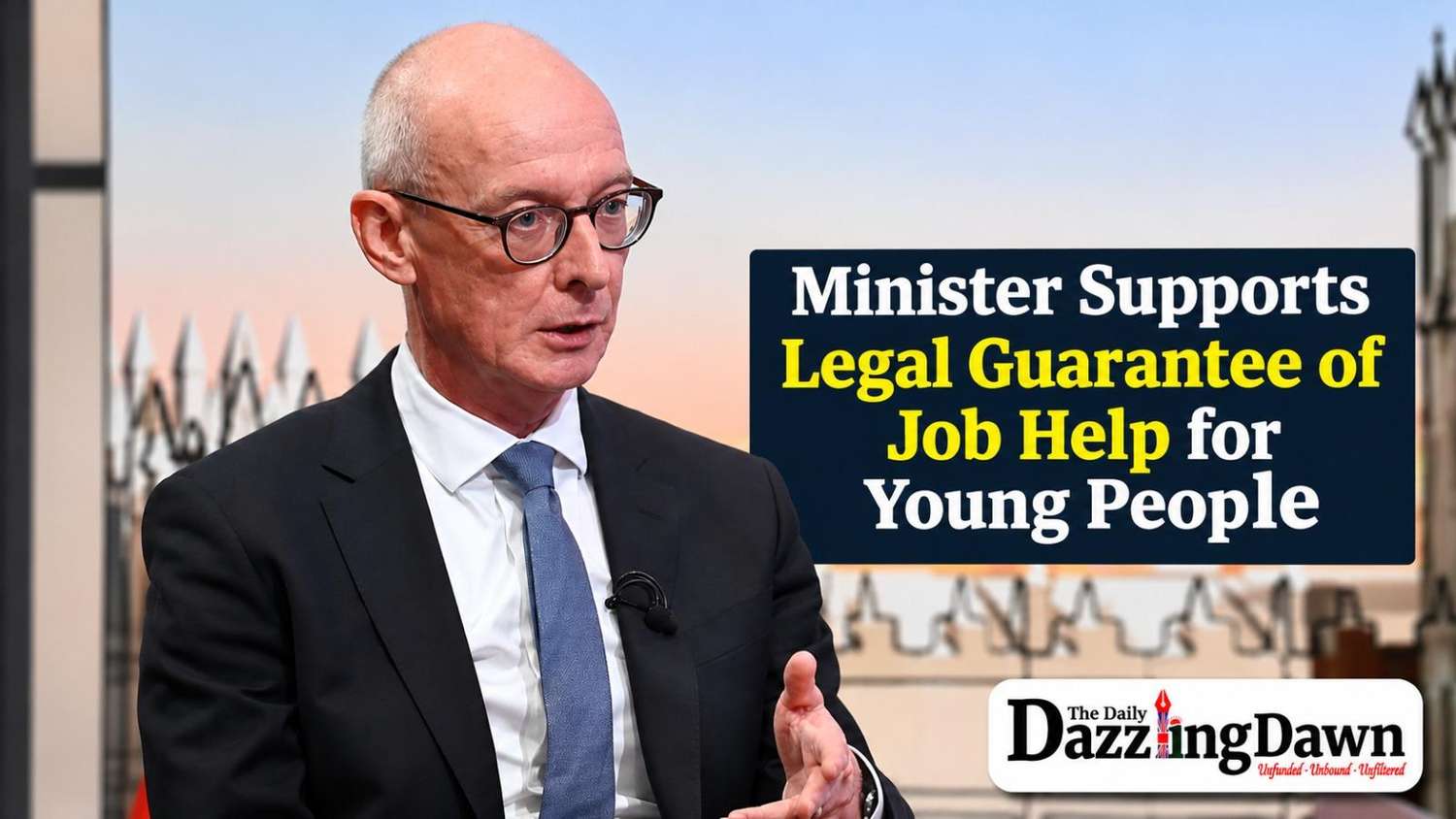
The UK work and pensions secretary has supported a proposal to make it a legal requirement for the government to provide young people with help to find employment.
Pat McFadden told the BBC that support for young jobseekers should have a "legislative underpinning", arguing that the current level of assistance available to them is too "vague".
McFadden also confirmed that some people currently receiving benefits would see their payments reduced when they undergo their scheduled reassessments.
However, his Conservative counterpart, Helen Whately, said the proposal to introduce a legal guarantee of employment support "doesn't make sense". She argued that ministers should instead concentrate on reducing the taxes businesses pay to employ workers.
The comments come ahead of a long-awaited review by former Labour cabinet minister Alan Milburn. His report, due to be published on Tuesday, is expected to recommend that everyone under the age of 25 should be guaranteed access to job placements or training opportunities to help them secure permanent employment.
The review is also expected to propose ending access to the health-related element of Universal Credit for under-25s, as well as Personal Independence Payment (PIP), the main disability benefit available in England and Wales.
Under the proposals, some young people could qualify for a new "additional cost allowance" to help cover everyday expenses linked to their health conditions.
Speaking on the BBC's Sunday with Laura Kuenssberg programme, Milburn said the government should redirect funding from the benefits system towards improving employment support. He said he wanted to see "billions" of pounds in additional investment in helping people find work over the next 10 years.
However, proposals to reduce benefits for existing claimants could face opposition from Labour MPs. Last year, they blocked an earlier plan by Sir Keir Starmer's government to cut welfare spending.
Milburn said any reduction in benefits entitlement for certain claimants should be matched by a new "duty on government" to provide employment support for young people.
Such assistance could include apprenticeships, college courses, employment coaching or direct job opportunities.
He also argued that previous temporary employment schemes, including the Kickstart programme introduced during the Covid pandemic, had been less successful in reducing long-term unemployment because they were not designed to provide lasting support.
It remains unclear exactly how the proposed legal guarantee would operate in practice. McFadden said the legislation would need to be drafted "carefully" to ensure it worked effectively.
Although local councils already have certain legal responsibilities, including duties relating to child protection and homelessness, the legal obligations placed on central government are generally much broader. One example is its responsibility to provide a "comprehensive" health service.
Asked during the same BBC programme whether he supported the proposal for a legal guarantee of employment assistance, McFadden said: "I do think we need some legislative underpinning to this."
He explained that the current support available to young people needed to become more reliable and clearly defined.
"The offer of support needs to be more firm," he said, adding that people should have greater certainty about the assistance they are entitled to receive.
McFadden also confirmed that the government intended to move younger benefit claimants onto a new benefits system when they undergo their scheduled reassessments. As a result, some people would receive less financial support than they currently do.
However, he said other claimants, including people with long-term disabilities, would receive higher payments under the changes.
Conservative shadow work and pensions secretary Helen Whately also spoke to Kuenssberg and confirmed that her party supported efforts to reduce government spending on welfare.
However, she criticised the proposal to introduce a legal guarantee of employment support for young people.
Whately said the idea might "sound a nice thing to do", but argued that ministers should focus on cutting taxes and reducing regulations for businesses to encourage employers to create genuine employment opportunities for young people.
She also described it as "absurd" that the government had increased taxes on employers while using public money to subsidise schemes that, in her view, only appeared to create jobs.
She added: "Just stop doing the taxing."
During his interview, former health secretary Alan Milburn also discussed several other proposals and concerns relating to welfare spending and employment.
The developments come as the government has announced plans to further expand eligibility for a scheme offering unemployed people under the age of 25 subsidised six-month employment opportunities paid at the minimum wage.
He said a lasting reduction in welfare spending could not realistically be achieved within just two or three years. He warned that making straightforward cuts to benefits could create additional costs for the government in other areas.
Milburn also argued that GPs should not have responsibility for signing sick notes to confirm whether people are medically unable to work.
He further suggested that ministers should "look very carefully" at Labour's manifesto commitment to gradually remove the lower minimum wage rate for workers aged between 18 and 21.
According to Milburn, moving towards equal minimum wage rates for younger workers had already placed considerable financial pressure on businesses.
From next April, eligible young people will be offered a place after spending 12 months unsuccessfully searching for work, rather than the current requirement of 18 months.
This is the second expansion of the scheme. Earlier this year, the government increased the maximum eligible age from 21 to 24.
The proposed changes are part of wider efforts to help more young people enter employment, reduce long-term unemployment and manage the rising cost of welfare spending across the UK.







.jpg)
.jpg)
.jpg)