





.svg)
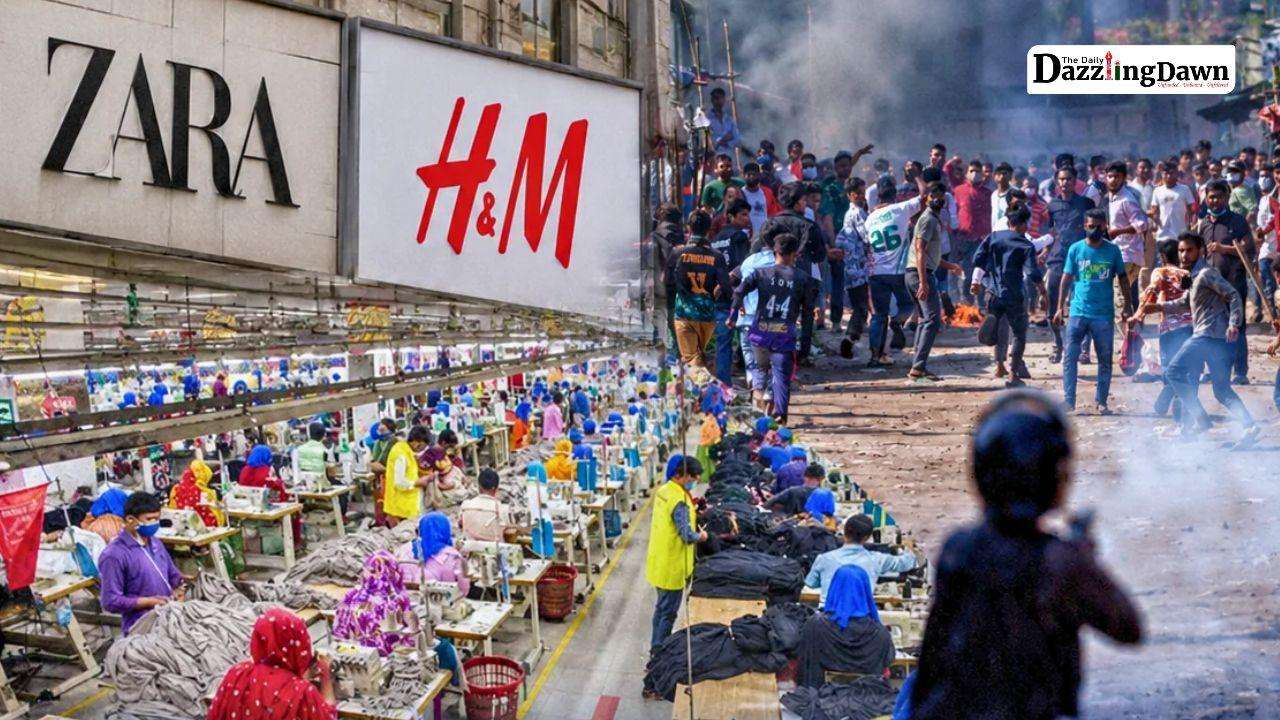
Bangladesh has lost approximately $254 million worth of garment orders to competing Asian manufacturing hubs between 1 and 18 November 2026, as global fashion retailers including Zara and H&M shift production away from the country amid labour unrest, rising manufacturing costs and growing concerns over delivery delays. India has emerged as the biggest beneficiary of the diversion, raising fresh concerns about Bangladesh's position as the world's second-largest apparel exporter after China.
Three Bangladeshi factory owners told Reuters that international fashion brands had diverted nearly 10 per cent of their monthly orders during the first half of November. The development threatens one of the country's most important export industries, which generates more than 80 per cent of Bangladesh's export earnings and provides nearly 40 per cent of its manufacturing employment.
The latest disruption comes as Bangladesh's garment sector faces mounting pressure from wage disputes, energy shortages, higher raw-material prices and continuing political uncertainty.
India has received the largest share of the orders shifted from Bangladesh, while Vietnam, Cambodia and Indonesia are also attracting international buyers seeking more reliable manufacturing and delivery arrangements.
Factory owners said major retailers, including Zara, H&M, Marks & Spencer and French fashion retailer Celio, were among the brands involved in the sourcing changes.
The movement of orders reflects a wider reassessment of Bangladesh's manufacturing competitiveness. For decades, relatively low labour costs helped the country establish itself as a major destination for international clothing production. However, increasing wages, higher utility expenses and interruptions to factory operations have weakened that advantage.
Zara's parent company, Spanish fashion group Inditex, declined to comment on Reuters' questions. Marks & Spencer, H&M and Celio did not respond to requests for comment.
Bangladesh Garment Manufacturers and Exporters Association (BGMEA) director M. Mohiuddin Chowdhury said manufacturers were facing increasing financial pressure as production costs continued to rise while international buyers demanded lower prices.
"The wage increase has added to costs at a time when buyers are demanding lower prices and competition from rival sourcing countries is intensifying," he said.
BGMEA president Mahmud Hasan Khan said temporarily transferring some orders to alternative manufacturing destinations could help Bangladeshi manufacturers maintain relationships with international clients while limiting financial losses.
Minimum Wage Increase Fails to End Factory Unrest
The order diversion coincides with a fresh wage dispute in Bangladesh's garment industry.
On Wednesday, 25 November, the government approved a 36 per cent increase in the minimum wage for garment workers. Although the adjustment represents a significant rise, it was the smallest increase in four decades and fell considerably short of workers' demands to more than double their wages.
The decision triggered further clashes between workers and police, highlighting the continuing difficulties facing factory owners and policymakers.
Abdur Rahman Tarafder, secretary of the Ministry of Labour and Employment, described the approved increase as "satisfactory" and expressed hope that garment workers would return to their workplaces from Saturday, 28 November.
However, the revised wage structure has created another challenge for manufacturers competing with lower-cost production destinations.
While industry representatives argue that higher wages will narrow Bangladesh's labour-cost advantage over India, trade union groups maintain that garment workers continue to receive relatively low pay by international apparel industry standards.
The BGMEA has estimated that labour unrest has already caused more than $400 million in production losses, adding to the financial damage from orders being transferred overseas.
Beyond labour costs, delivery reliability is becoming an increasingly important factor in international sourcing decisions.
Bangladeshi manufacturers are facing persistent energy shortages, which have been exacerbated by the Middle East crisis. Some factories have been forced to depend on more expensive alternative power sources to maintain production.
Chowdhury said international buyers were increasingly prioritising delivery deadlines over purchasing prices when selecting manufacturing partners.
He estimated that India could offer delivery approximately one week faster than Bangladesh, while Vietnam and Cambodia could reduce lead times by as much as 15 days.
According to his assessment, competing manufacturing hubs can generally complete production and delivery within 60 to 90 days. Bangladesh, by comparison, may require approximately 120 days.
The difference is particularly significant for international fashion retailers operating under strict seasonal production schedules. Delayed shipments can affect retail launches, inventory planning and the availability of clothing collections across international markets.
Manufacturers around Dhaka have reportedly lost an estimated 20 to 25 production days because of the recent disruptions. Some factories are considering additional overtime and expensive air freight to fulfil existing commitments.
For Bangladeshi manufacturers, the most serious concern is not simply the immediate loss of orders but the possibility that international retailers may permanently relocate their future production.
Khan Monirul Alam, managing director of Alps Apparels Group, which mainly supplies European fashion brands, said the unrest had already affected new business opportunities.
"Since November 1, most of my buyers have stopped placing orders because of the unrest," Alam said.
He added that buyers had informed his company that orders had been shifted, postponed or cancelled, with alternative manufacturing arrangements already secured.
The comments suggest that temporary sourcing decisions could develop into longer-term commercial relationships between international retailers and competing Asian manufacturers.
Political uncertainty is adding another layer of concern. Tensions surrounding former prime minister Sheikh Hasina's possible return to Dhaka from India have contributed to questions about Bangladesh's political stability and the potential for further disruption.
The latest order diversion presents a significant challenge for Bangladesh's ready-made garment industry, which has been central to the country's export-led economic development.
Restoring uninterrupted factory operations, improving energy security and maintaining competitive production costs will be essential if Bangladesh hopes to retain its international customers.
Manufacturers must also demonstrate that they can meet increasingly demanding delivery schedules while managing higher labour and operating expenses.
Chowdhury warned that orders transferred during periods of instability might not return even after production conditions improve.
"The challenge is restoring buyers' confidence before temporary shifts become long-term sourcing decisions," he said. "Brands have options. They will not wait for us if instability persists."
For Bangladesh, the stakes extend far beyond the $254 million in orders already diverted. If international fashion retailers establish lasting sourcing arrangements in India, Vietnam and other competing markets, the country could face a longer-term reduction in export opportunities, manufacturing investment and employment.
The immediate priority for the industry is therefore to restore production stability and reassure global buyers that Bangladesh remains a dependable destination for international garment manufacturing.