





.svg)
Yorkshire was officially declared in drought on Friday, 9 October 2026, after months of below-average rainfall left rivers, reservoirs and groundwater levels unusually low, according to the Environment Agency. The declaration raises concerns about water resources, agriculture and wildlife as much of England continues to experience dry conditions despite recent rainfall.
The region had been under prolonged dry weather status since the end of July. The Environment Agency said the continuing lack of rain had pushed water levels in parts of Yorkshire to the threshold for a formal drought declaration. Yorkshire now joins central, southern and eastern England in drought status, while the North East and North West remain under prolonged dry weather status.
The declaration highlights growing pressure on water resources after an exceptionally dry spring and summer. If conditions persist, households and businesses may be encouraged to reduce water consumption, while water companies could consider additional measures if local supplies come under further strain.
A drought declaration does not automatically mean that every household will face a hosepipe ban or other restrictions. Any restrictions would depend on the condition of local supplies and decisions by the relevant water companies and authorities.
Farmers could also face difficulties if water shortages affect crops, livestock and other agricultural operations. Prolonged dry conditions can reduce soil moisture, increase pressure on irrigation supplies and make it harder for some parts of the agricultural sector to maintain normal production.
Low river flows and falling groundwater levels can also affect wildlife and freshwater habitats. The consequences may continue beyond the end of a dry spell because rivers, reservoirs and underground water reserves do not always recover immediately when rainfall returns.
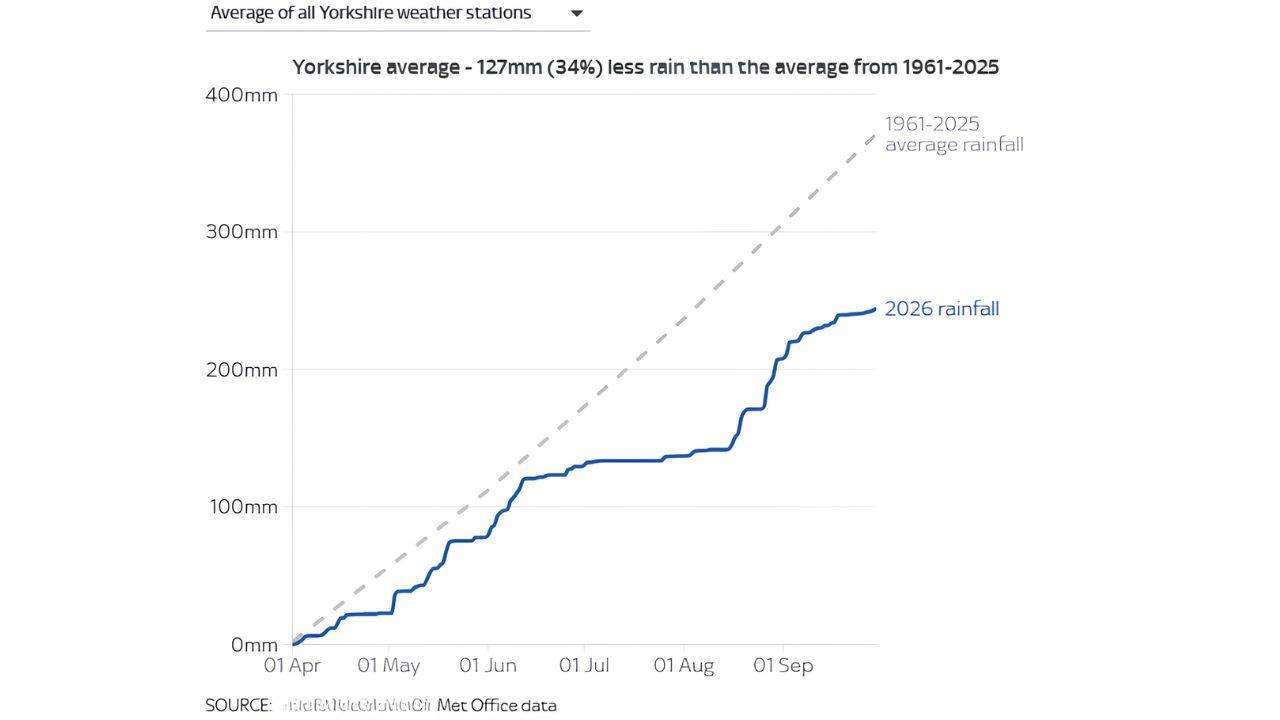
Analysis by Sky News' Data and Forensics team found that rainfall across 17 weather stations in Yorkshire was 34% below normal between April and September 2026.
The situation was particularly severe between 15 June and 15 August, when Yorkshire received just 15% of its normal rainfall for that period. At the Normanby Hall weather station near Scunthorpe, recorded rainfall fell to just 5% of the usual level.
Vicki Townend, the Environment Agency's area environment manager, said the prolonged lack of rainfall had left river flows and groundwater levels very low in parts of the region.
She warned that even several weeks of rain would not quickly reverse the effects of the dry spring and summer. Her comments underline the difference between short-term rainfall and the sustained replenishment needed to restore depleted water resources.
Although rain has fallen in recent weeks, it has not been sufficient to make up for the accumulated shortfall. After months of dry weather, water systems may need sustained rainfall before rivers, reservoirs and groundwater levels return to healthier conditions.
The effect of rainfall also depends on where it falls, how heavily it falls and how much water enters the ground or flows into reservoirs. A brief period of wet weather may improve conditions locally without resolving shortages across an entire region.
The Environment Agency said it would continue monitoring conditions and implementing Yorkshire's drought plan. The plan is intended to guide the response as water levels and environmental conditions change.
Yorkshire's drought declaration follows the UK's hottest summer since records began in 1884, according to provisional Met Office statistics. The average temperature for June, July and August 2026 reached 16.5°C, exceeding the previous seasonal record of 16.1°C set in 2025.
The country also experienced five heatwaves, alongside extended periods of little or no rainfall in some areas. The combination of higher temperatures and limited precipitation can increase evaporation and place additional pressure on water resources.
The Environment Agency has warned that climate change is contributing to longer, hotter summers and more intense rainfall during winter. These changing patterns can increase the likelihood of drought while also raising the risk of flooding during periods of heavy rainfall.
The agency noted that drought conditions had occurred in the UK in 2022 and 2025, with another drought affecting parts of the country in 2026. The repeated episodes have added to concerns about the resilience of water supplies as weather patterns change.
Water minister Emma Hardy said recent rainfall had not replenished all the water used during spring and summer. She said the Yorkshire declaration highlighted the seriousness of the situation and identified long-term resilience to climate change as a government priority.
Residents are being encouraged to use water carefully and avoid unnecessary waste while authorities continue to assess conditions. Practical steps to reduce consumption can help limit demand, although the wider recovery of water resources will depend on rainfall and the condition of local supplies.
Daily Dazzling Dawn reports that the immediate impact on households will depend on how the situation develops and whether additional measures become necessary. Residents should follow advice issued by their water companies and relevant authorities rather than assume that restrictions will apply everywhere.
The Environment Agency will continue tracking river flows, groundwater levels and other indicators as it implements Yorkshire's drought plan. Further rainfall could improve the outlook, but officials have cautioned that the effects of several dry months cannot be reversed quickly.
The coming weeks will be important in determining whether water levels begin to recover or whether dry conditions continue to place pressure on supplies, farming and natural habitats.
For communities across Yorkshire and other affected parts of England, the key concern is whether rainfall will return in sufficient quantities to restore water resources before further restrictions become necessary.