






.svg)
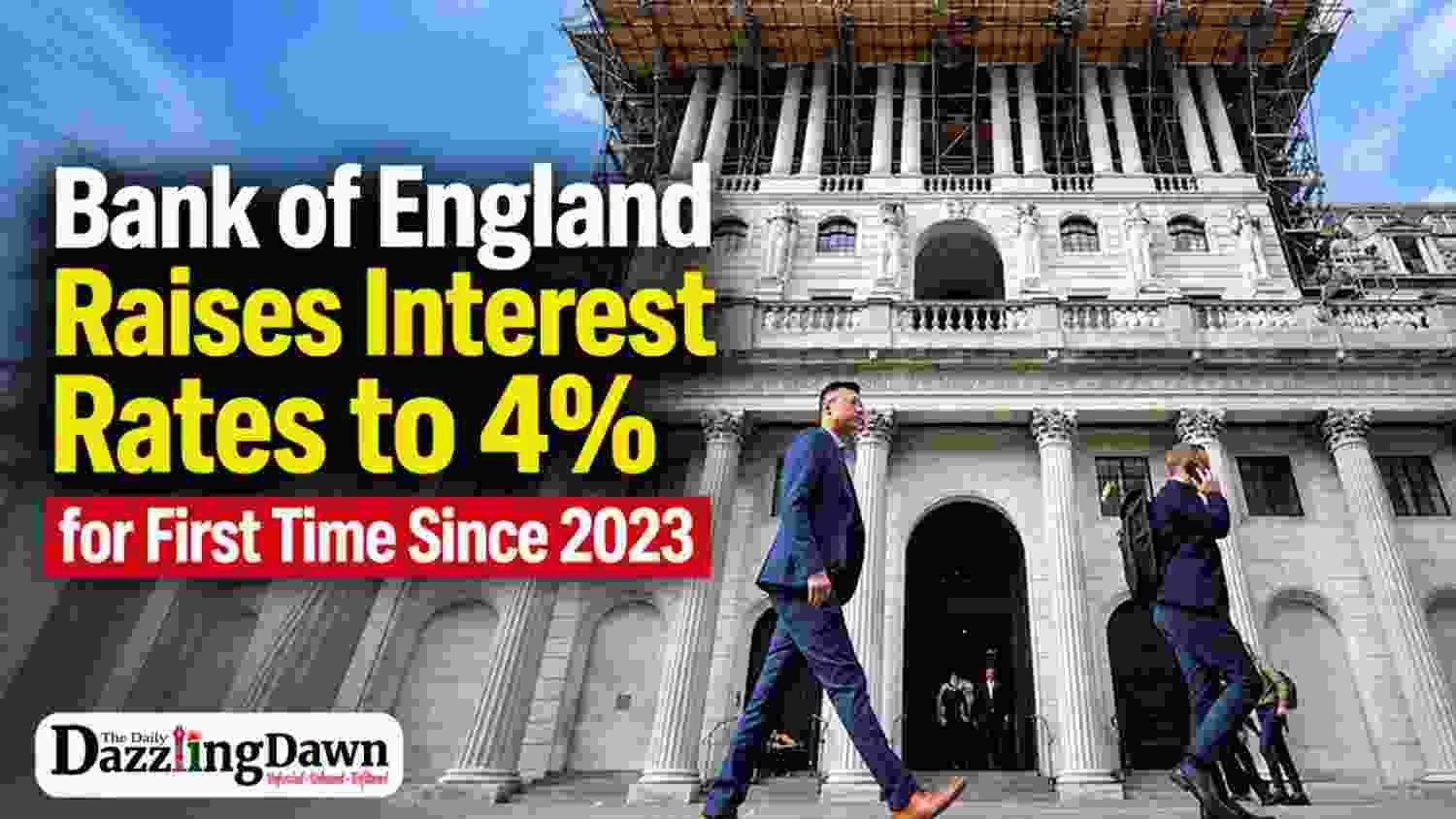
The Bank of England has raised its main interest rate from 3.75% to 4%, marking its first increase since August 2023. The decision comes amid rising inflation risks linked to the ongoing US-Iran conflict and higher global energy prices.
The central bank's Monetary Policy Committee (MPC) voted 8-1 in favour of the quarter-point increase. However, Catherine Mann voted for a larger increase, proposing that the rate should rise to 4.25%.
Bank of England Governor Andrew Bailey warned that further increases could be necessary if the conflict in the Middle East continues to push energy prices higher. He stressed that Thursday's decision should not be interpreted as the beginning of an inevitable series of rate hikes.
UK inflation reached 3.5% in September, significantly above the Bank of England's 2% target. The central bank expects inflation to rise to around 5% by the middle of 2027, largely because of higher energy costs.
The Bank also warned that prolonged increases in energy prices could spread inflationary pressure across other parts of the economy, including wages and consumer prices.
The Bank's latest projections indicate that inflation may not return to its 2% target until the third quarter of 2028. This is later than its previous forecast, reflecting the prolonged impact of higher energy prices.
Policymakers remain divided over whether additional increases will be necessary. Deputy Governor Clare Lombardelli indicated that another rise could be required in the near term. Chief Economist Huw Pill also suggested that further monetary tightening might be needed.
However, other committee members stressed that future decisions would depend on whether higher energy costs lead to sustained increases in wages and prices. Governor Bailey said the Bank would continue assessing economic developments rather than follow a predetermined path.
The Bank also highlighted signs of resilience in the British economy, with stronger-than-expected economic activity partly supported by investment and spending linked to artificial intelligence. Nevertheless, higher borrowing costs and energy bills are expected to put pressure on households and businesses.
The central bank warned that British households could face declining real incomes from employment this year and next, as inflation and taxes continue to affect their purchasing power.
The latest rate increase is expected to make borrowing more expensive, potentially affecting mortgage payments, business loans and consumer spending. At the same time, higher interest rates could help control inflation by reducing demand across the economy.
The Bank of England said its future decisions would depend on developments in energy prices, inflation, wages and overall economic activity.





.jpeg)