





.svg)
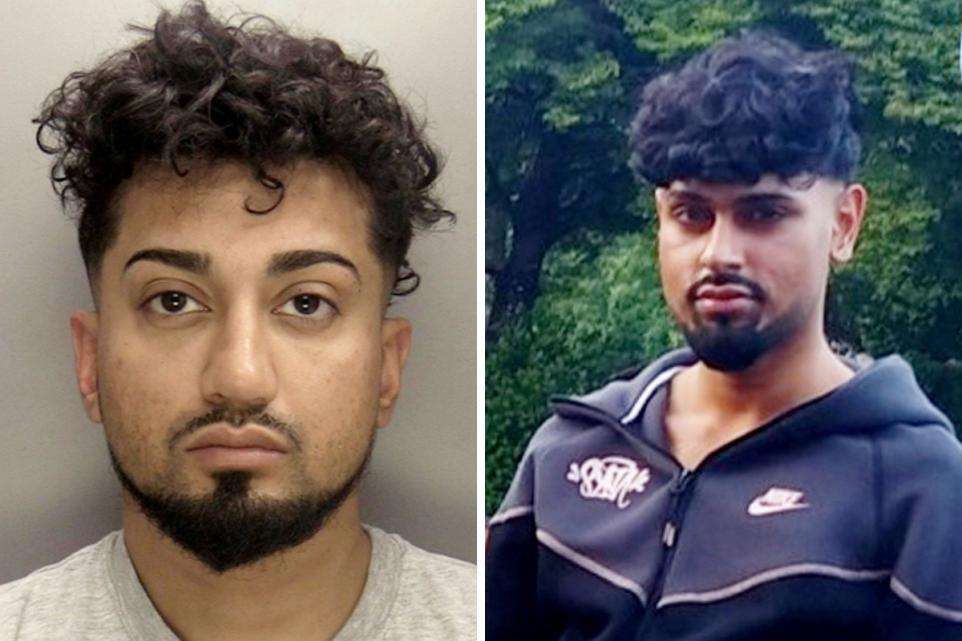
A 35-year-old man who subjected his younger male partner to two years of coercive control has been sentenced to life imprisonment at Birmingham Crown Court for his murder. Imran Uddin strangled and repeatedly stabbed his boyfriend, 24-year-old Ismail Younis, at his flat on Richmond Road in Hockley, Birmingham, on 17 August 2025, after Younis discovered evidence of infidelity and tried to end their same-sex relationship. Daily Dazzling Dawn understands that Uddin fled across county borders following the homicide, indulging in personal grooming treatments while leaving the victim's body behind, before detectives secured his arrest. He must now serve a minimum term of 21 years behind bars before being considered for parole.
The prosecution outlined how the gay couple's private relationship deteriorated under sustained intimidation, emotional manipulation, and territorial jealousy. Younis, who lived with autism and struggled with vulnerability, faced relentless belittling and surveillance by Uddin, who systematically restricted his daily autonomy. Court proceedings detailed how Uddin monitored Younis’s personal communications, dictated his social movements, and exploited his condition to maintain absolute authority within the household.
The crisis point arose when Younis uncovered evidence that Uddin had been cheating on him. Terrified yet determined, Younis announced his intention to separate. In response, Uddin stalked the 24-year-old through Birmingham city centre on 17 August, turning up repeatedly at his workplace before convincing him to travel back on an electric scooter to the Richmond Road address. Once behind closed doors, Uddin launched a violent physical assault, strangling Younis to unconsciousness before inflicting multiple knife wounds, which forensic specialists confirmed continued even after life was extinct.
Following the fatal attack, Uddin washed the kitchen knife, stowed it back into a drawer, and evacuated the scene rather than alerting emergency medical services. He caught a train from Birmingham New Street to Milton Keynes to reach family connections before moving into Buckinghamshire. While Younis lay dead inside the locked flat, CCTV captured Uddin casually visiting salons in Aylesbury the next day to get his hair cut and his eyebrows threaded.
Officers from West Midlands Police forced entry into the flat on 20 August after relatives reported Younis missing, uncovering his body three days after the murder. Uddin was apprehended in Aylesbury on 21 August, where body-worn footage showed him feigning shock and exclaiming disbelief when informed of his partner's death. Forensic teams subsequently recovered Younis’s DNA on Uddin’s mobile phone. Speaking to Daily Dazzling Dawn, Detective Sergeant Jeanette Roberts stated that Uddin exhibited cold self-preservation throughout the inquiry, operating as a manipulative narcissist who refused to relinquish dominance.
The domestic homicide occurred against a backdrop of deep cultural sensitivities. Uddin is understood by community sources to be of Bangladeshi heritage, although his exact ancestry was not formally verified as a judicial finding of fact during open hearings. Both men identified as Muslim, navigating an intimate same-sex partnership within communities where traditional theological boundaries remain strictly defined.
Mainstream Islamic orthodoxy and traditional interpretations of the Quran explicitly forbid gay relationships and homosexual intercourse. Classical Muslim scholars trace this prohibition through verses addressing the narrative of Prophet Lut in Surah Al-A'raf, which denounce same-sex physical union as a transgression of divine law. Legal commentators highlighted that while societal or religious stigma can complicate gay relationships within conservative households, the presiding judge underlined that Uddin’s unrestrained possessiveness, violent temper, and refusal to let his boyfriend leave were the sole drivers of the fatal act.
Tributes from Younis's grieving family remembered him as their beloved boy whose gentle nature was taken far too soon. West Midlands Police affirmed that the 21-year minimum tariff reflects the judicial system's severe view of domestic homicides arising from abusive coercive control.