






.svg)
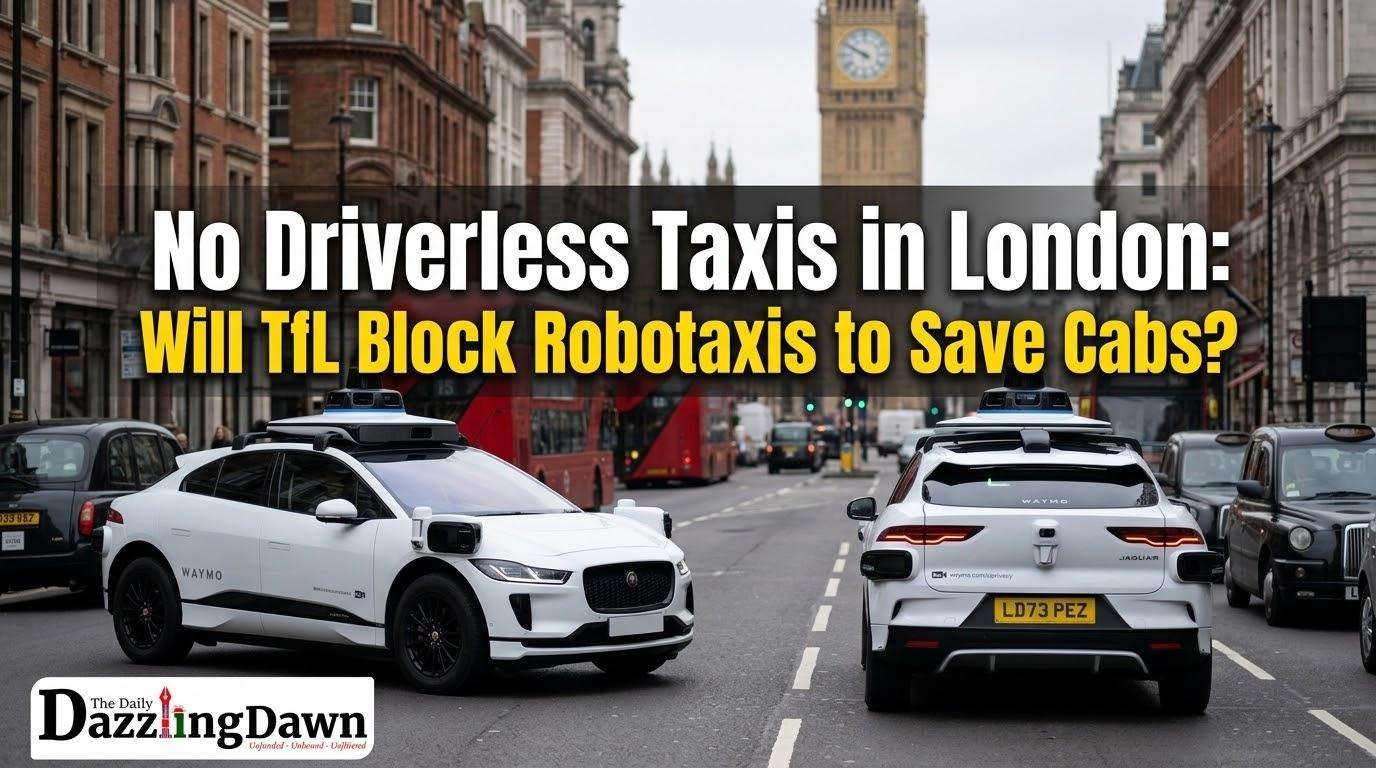
Transport for London faces immediate demands from City Hall to halt commercial autonomous passenger vehicles across the capital until comprehensive municipal regulations are established. In a comprehensive inquiry report released on Monday, 12 October 2026, the London Assembly Transport Committee declared that it has not heard sufficient evidence to justify welcoming commercial autonomous fleets onto the city road network. Lawmakers formally called on municipal transport chiefs to withhold operational consent from autonomous operators, warning that premature deployment creates unacceptable risks for road safety, accessibility, and urban congestion.
The decisive intervention delivers a vital lifeline to London's licensed black-cab trade and more than one hundred thousand private hire drivers operating across platforms such as Uber and Bolt. The capital's taxi sector has shouldered intense financial pressures from surging insurance premiums, vehicle finance rates, and regulatory overheads. Trade representatives warned that driverless services threatened catastrophic workforce displacement. Representatives from the App-Based Drivers & Couriers Union and GMB told journalists that unchecked corporate automation would undermine driver earnings while shifting unvetted safety risks directly onto the travelling public. The cross-party committee specifically recommended that Transport for London formulate a funded just-transition strategy to protect driver livelihoods, prevent technological exploitation, and retrain affected transport workers.
At the center of the dispute, detailed in the report titled Who’s driving the future of autonomous transport in London?, is a severe regulatory mismatch between central government and municipal authorities. Under current frameworks governing the Automated Vehicles Act, primary permitting power rests with the national Department for Transport rather than City Hall. Transport for London currently lacks the legal mechanisms to cap the volume of robotaxis entering local boroughs or withdraw permits when safety breaches occur. The committee demanded that Whitehall fully devolve the authority to issue, condition, and revoke Automated Passenger Service permits to London transport authorities before national regulations conclude in 2027.
Accessibility and passenger safeguarding represent critical barriers for prospective driverless operators. Prototypes currently trialled on British streets fail to satisfy mandatory wheelchair accessibility standards enforced on London hackney carriages, offering no human physical assistance for elderly or disabled commuters. Daily Dazzling Dawn understands that lawmakers also cited serious shortcomings in personal security, noting that autonomous operators have presented no workable safeguards for passengers facing sudden medical emergencies, harassment, or physical assault inside unstaffed passenger cabins. To address remote oversight risks, the committee recommended that teleoperation assistants be based in the United Kingdom and subject to mandatory criminal record checks.
Emergency service coordination and urban congestion mitigation form two further pillars of the legislative demands. Lawmakers highlighted instances where autonomous trial vehicles exhibited erratic braking or unexpected maneuvers, causing hazardous interactions with first responders. The Assembly instructed Transport for London to institute mandatory twenty-four-hour incident reporting for collisions, system disengagements, and near misses. Transport regulators were also instructed to build real-time override protocols alongside the Metropolitan Police Service, the London Fire Brigade, and the London Ambulance Service.
Urban planning experts further warned that unmonitored fleets will exacerbate deadheading, where empty autonomous vehicles cruise through streets awaiting fares. The Assembly warned that empty mileage threatens to delay London bus networks and increase air pollution outside schools. While operators including Waymo continue restricted technological testing across defined London corridors, full open-market commercial rollouts remain postponed until late 2027 at the earliest. Daily Dazzling Dawn understands that transport officials will present formal representations to the Department for Transport, insisting that London streets remain driver-led until every statutory safeguard is placed under local democratic control.