




.svg)
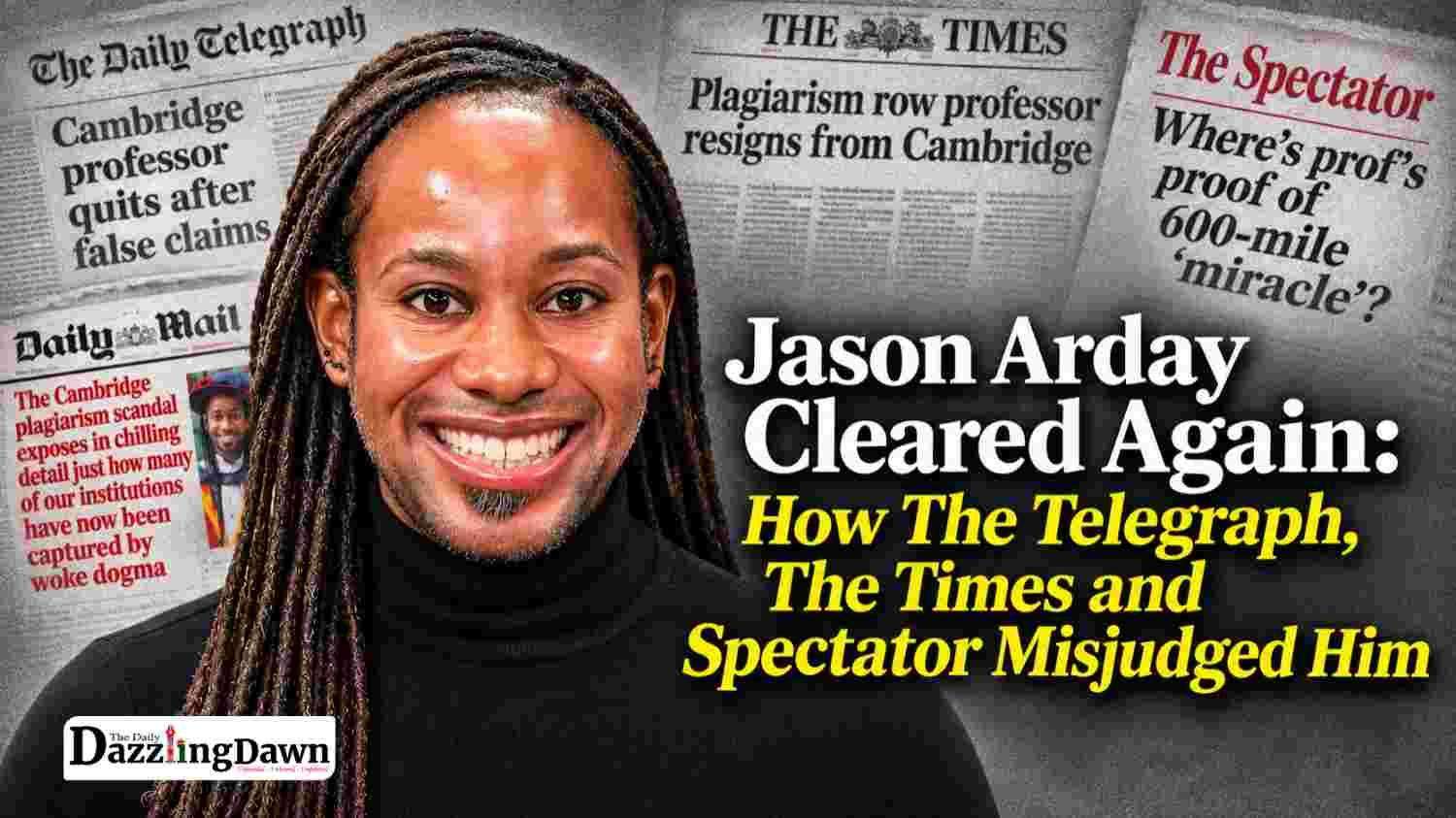
Queen's University Belfast confirmed on 26 November 2026 that a 2021 research paper co-authored by the late Professor Jason Arday meets appropriate academic standards, making it the second British university to clear his scholarship after his death in Battersea, London, on 14 August 2026 at the age of 41. Arday, who made history in 2023 as the University of Cambridge's youngest Black professor, resigned as professor of sociology of education on 5 August 2026, nine days before his death, citing intense public pressure over plagiarism allegations and scrutiny of his life story. The Belfast ruling follows an earlier clearance by Liverpool John Moores University, which awarded Arday's PhD in 2015 and concluded he had not plagiarised work, intensifying criticism of The Telegraph, The Times, and The Spectator over their coverage before and after his death.
Queen's University Belfast opened its review into Arday's work after he stepped down from his University of Cambridge roles in August 2026. The reviewed study, titled Attempting to Break the Chain: Reimagining Inclusive Pedagogy and Decolonising the Curriculum Within the Academy, was co-authored by Arday and colleagues at Queen's and published in 2021 on the impact of university teaching on Black, Asian and Minority Ethnic learners and academics of colour. Daily Dazzling Dawn understands that the paper had already been updated in 2024 to clarify methodological links to an earlier paper by Arday and a 2016 study by researchers at Brighton and Sussex Medical School. In announcing the outcome on 26 November 2026, a Queen's University Belfast spokesperson told journalists that after reviewing the matter, the university was satisfied the paper meets appropriate academic standards and held no concerns regarding its publication.
Institutional reviews elsewhere have reached similar conclusions regarding Arday's doctoral and peer-reviewed output. Liverpool John Moores University, which conferred his doctorate in 2015, cleared him of plagiarism following a formal examination of textual overlaps, classifying citation discrepancies in introductory background material as an honest and reasonable error rather than deliberate academic fraud. Other universities, including Glasgow University and Durham University, also initiated reviews of his work or academic appointments, while the University of Cambridge launched a two-part independent review into the support provided to Arday before his death alongside the wider context of his tenure. An inquest into his death remains under way.
The plagiarism claims against Arday originated online with Nathan Cofnas, a US researcher and self-described race realist who had previously argued that Black people are less intelligent than other groups and would disappear from high-profile positions outside sport and entertainment under a meritocratic system. Writing on Substack, Cofnas claimed that plagiarism detection software showed passages in Arday's writing were lifted with minimal editing. Following Arday's death, Ghent University suspended Cofnas and opened an investigation into him for discriminating against the late Cambridge professor, subsequently imposing a three-month teaching ban.
Despite the contested source of the accusations, British newspapers escalated the story into a relentless multi-week campaign. Media analysis compiled by NewsCord documented 229 articles across 14 outlets in 22 days, including 188 articles published in the nine days between Arday's resignation on 5 August—when he warned he had reached the limits of what any person should reasonably endure—and his death on 14 August. According to media monitoring figures, The Times, The Sunday Times, and The Telegraph each published at least 40 articles on Arday between 24 July and his death, while The Spectator ran more than 20 pieces and the Daily Mail produced nearly 40. Critics noted that The Telegraph continued publishing critical commentary right up to the afternoon of 14 August, and later quietly edited the word living out of a column headline that had originally declared Arday was living proof that you reap what you sow.
For supporters, colleagues, and anti-racism campaigners, the clearances by Liverpool John Moores University and Queen's University Belfast expose a severe failure of proportionality in British journalism. Critics argue that because Arday was a prominent Black professor at an elite university who openly discussed overcoming childhood autism, developmental delays, and illiteracy until age 18, sections of the right-leaning press treated his achievements as inherently suspect. Headlines in The Telegraph and The Spectator repeatedly framed him around diversity debates and culture-war narratives rather than waiting for formal university panels to examine the academic evidence.
Commentators have also highlighted stark institutional double standards in how allegations are handled across British universities. Writing in The Independent, critics contrasted the immediate public announcement of an investigation into Arday on the day he resigned with how a Cambridge college dealt with a senior academic after ten women complained of sexual harassment, where an apology was followed by the restoration of dining rights. Supporters contend that institutions and newspapers alike decide whose alleged misconduct becomes an urgent public spectacle and whose is treated quietly behind closed doors.
Defensiveness Across The Telegraph, The Times And The Spectator
Rather than expressing contrition after Arday's death, major newspapers met public anger with institutional defensiveness. More than 30,000 people, including Labour MP Diane Abbott and actress Jameela Jamil, signed an open letter to Prime Minister Andy Burnham stating that Arday's death followed two weeks of relentless harassment and calling for a public inquiry into media coverage. Burnham described the loss of the 41-year-old scholar as a tragedy on so many levels.
Daily Dazzling Dawn learned that press-reform campaign group Hacked Off accused The Telegraph, The Times, and The Spectator of brittle defensiveness and hypocritical self-justification. Hacked Off executive director Nathan Sparkes pointed to a Telegraph column by Charles Moore asserting that Arday's tragedy could not be blamed on the press, alongside editorials in The Sunday Times, a coordinated letter in The Times defending journalists, and commentary in The Spectator attacking diversity initiatives. Sparkes noted that while those titles insist they have every right to scrutinise a resigned professor, they aggressively oppose independent press regulation or any formal inquiry into their own conduct. With two universities now having cleared Arday's scholarship, critics argue that the press narrative used to hound him in life has collapsed under independent academic scrutiny.








.jpeg)