





.svg)
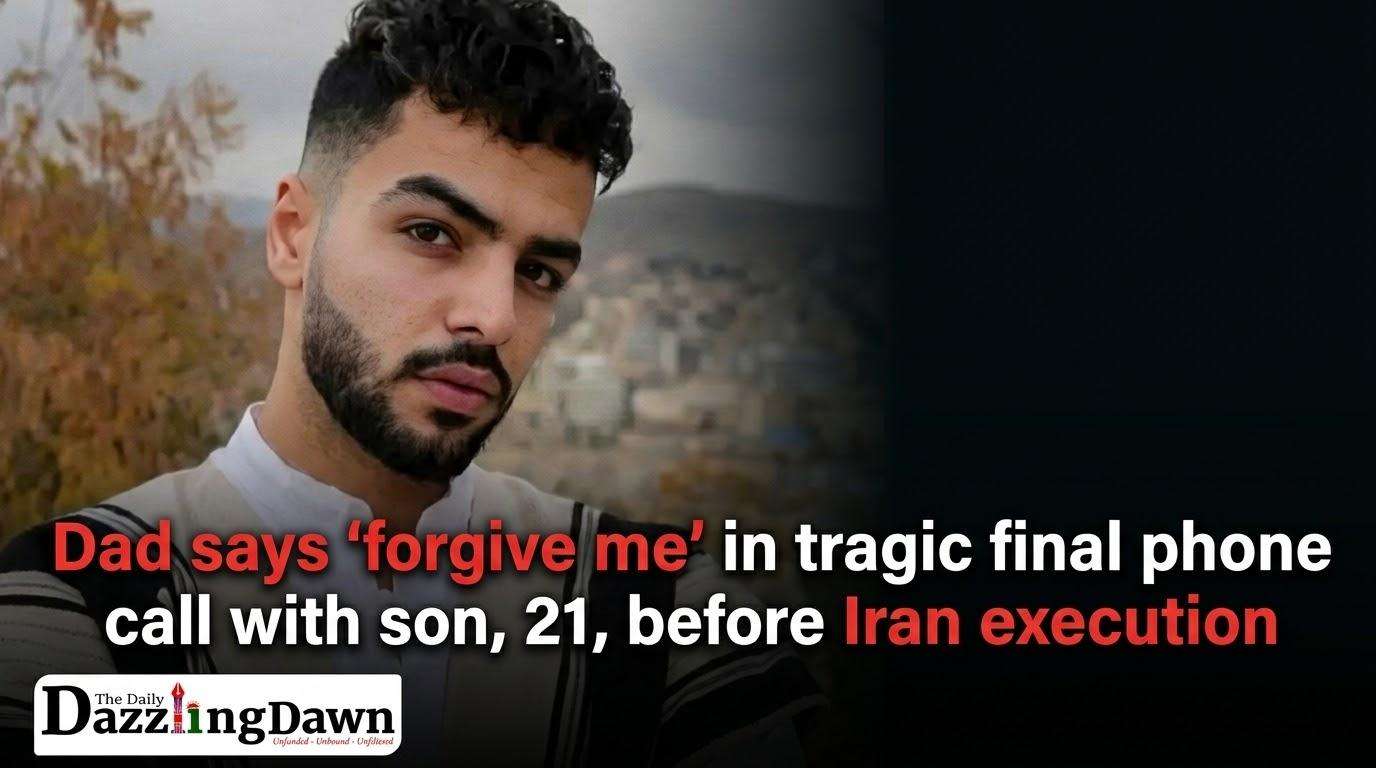
In an emotionally devastating final telephone conversation recorded inside Isfahan Central Prison, 21-year-old Iranian demonstrator Alireza Raisi comforted his weeping father with the words "don't cry, dad" moments before his execution by hanging. Iranian authorities carried out the capital punishment against Raisi alongside 25-year-old fellow demonstrator Alireza Sepahi, both having been condemned for their alleged roles in demonstrations against the ruling regime earlier this year. Human rights organisations, including Iran Human Rights and the Hengaw Organization for Human Rights, have condemned the expedited legal proceedings as deeply flawed show trials marked by severe mistreatment and coerced admissions.
The audio recording captures Raisi attempting to alleviate the profound anguish of his father, who pleaded helplessly over the prison line, saying, "Forgive me! Forgive me. There is nothing I can do for you." Rather than expressing terror, the young detainee chose to bolster his father's spirit, answering with unwavering composure: "Dad, I am proud of you in every way. I am always proud of you." As his father wept and affirmed that he too was proud of his son, Raisi sought to provide solace concerning the wider tragedy engulfing their family, asking his father to pass on his regards to his uncle and promising that he would look after his late cousin, Ramin Raisi, who was killed by security forces during demonstrations in Isfahan's Baharestan neighbourhood on 9 January.
Both Raisi and Sepahi were among a group of twelve individuals charged by Iranian judicial authorities with the deaths of four state security personnel during civil unrest at Shahid Alikhani Square in Isfahan. The regime has previously utilised the same public square for state hangings to deter further anti-government mobilisations. Legal observers and human rights advocates reported that the defendants endured weeks of intense physical abuse, sensory deprivation, and psychological coercion designed to elicit confessions that were subsequently presented as primary evidence in proceedings lasting only minutes.
Human rights monitors have highlighted particularly poignant circumstances surrounding Sepahi’s final hours. Sepahi had previously escaped execution in July after collapsing with a severe cardiac episode on his path to the gallows, falling into a coma before regaining consciousness, only for judicial officials to reschedule his hanging. Daily Dazzling Dawn learned that just hours prior to being led to the gallows, Sepahi married his incarcerated fiancée, Mahshad Kashani, over a prison telephone without ever being permitted an in-person visit. Kashani, also detained in connection with civil disobedience, is currently serving a five-year prison sentence.
Prominent Iranian campaigners and international legal figures have expressed profound outrage over the executions. Iranian journalist Masih Alinejad noted that the expedited legal processes represent a profound violation of human dignity and basic judicial standards, stating that the regime operates through extensive physical abuse, extracted statements, summary hearings, and the dismissal of legal appeals within hours. Alinejad emphasised that the ongoing implementation of capital punishment against young demonstrators will fail to quell public dissent and will instead generate deeper societal defiance.
Daily Dazzling Dawn understands that the anguish for the bereaved families has extended beyond the executions themselves. Iranian security forces have reportedly obstructed the families of both Raisi and Sepahi from conducting traditional burial services and mourning ceremonies within their respective home towns, a tactic regularly employed by state authorities to prevent funeral processions from evolving into renewed public protests. Exiled civil society groups and international human rights watchdogs continue to appeal to global bodies to enforce targeted diplomatic measures against the judiciary's escalating capital penalties.






.jpg)