







.svg)
Medical researchers and public health advocates across the United Kingdom have issued an urgent clinical warning after a landmark court ruling revealed how mistaking bowel cancer for common haemorrhoids cost a patient nearly five years of life expectancy. While genome-wide association studies confirm that White British and European-ancestry populations carry the highest baseline prevalence of both haemorrhoids and inflammatory bowel disease in the UK, British Bangladeshi and wider South Asian communities face an acute, compounding danger from rising colorectal conditions and low diagnostic screening uptake. Following an October 2026 New South Wales Supreme Court judgment in Sydney, where personal trainer Ross Peterkin won a medical negligence lawsuit against General Practitioner Dr Abram Tadros over an August 2022 misdiagnosis, UK gastro-intestinal specialists told journalists that assuming rectal bleeding is simply benign piles is a potentially fatal error.
Epidemiological data across the United Kingdom demonstrates a complex division in how anorectal and colorectal diseases affect different demographic groups. According to large-scale genetic datasets, including research analysing 218,920 haemorrhoid cases and 725,213 controls published in Scientific Reports by lead researcher HanYu Wang and senior author QinXiu Zhang, individuals of White European ancestry exhibit the highest documented clinical prevalence of haemorrhoids, affecting between 4.4 per cent and 45 per cent of the adult population. This elevated baseline contributes to more than 20,000 surgical haemorrhoidectomies performed across National Health Service hospitals each year.
However, clinical data from Barts Health NHS Trust in East London and national NHS England screening audits reveal a parallel crisis within the British South Asian demographic, particularly among British Bangladeshi residents in boroughs such as Tower Hamlets, Newham, and Camden. While historically recording lower overall colorectal cancer rates than White British counterparts, second- and third-generation British Bangladeshis are experiencing a sharp generational surge in inflammatory bowel disease, Crohn's disease, and early-onset bowel pathologisation. Daily Dazzling Dawn understands that dietary transitions Toward refined carbohydrates, chronic metabolic conditions, and high rates of gestational and postpartum pelvic strain among South Asian women have driven symptomatic piles rates upward across UK primary care clinics.
The danger of self-diagnosing or casually dismissing anorectal symptoms is magnified by newly established genetic links between chronic gut inflammation and haemorrhoidal tissue breakdown. In their landmark Mendelian randomisation study examining International Inflammatory Bowel Disease Genetics Consortium cohorts of over 59,000 subjects, Wang and Zhang proved a direct causal relationship between Crohn's disease and the development of haemorrhoids, recording a statistically significant odds ratio of 1.02 with a p-value of 0.00000412. The researchers established that symptomatic haemorrhoids occur in up to 20.7 per cent of inflammatory bowel disease patients, with Crohn's disease patients facing a specific prevalence rate of 7 per cent and ulcerative colitis patients experiencing a 10-year haemorrhagic piles incidence of 6.7 per cent.
Speaking to Daily Dazzling Dawn, clinical gastroenterology analysts explained that the biological mechanism involves small non-coding RNAs known as microRNAs, specifically miR-16, miR-21, and miR-223, which circulate at elevated levels in the blood of Crohn's disease patients. These molecules trigger inflammatory cytokines such as tumour necrosis factor-alpha and upregulate a zinc-dependent proteolytic enzyme called matrix metalloproteinase-9. When matrix metalloproteinase-9 is overexpressed, it degrades vital extracellular elastin and collagen fibres in the anal cushion. This structural degradation causes the submucosal anal pad to displace downward, forming painful, bleeding piles that can easily obscure simultaneous malignant tumours or severe intestinal strictures higher in the colon.
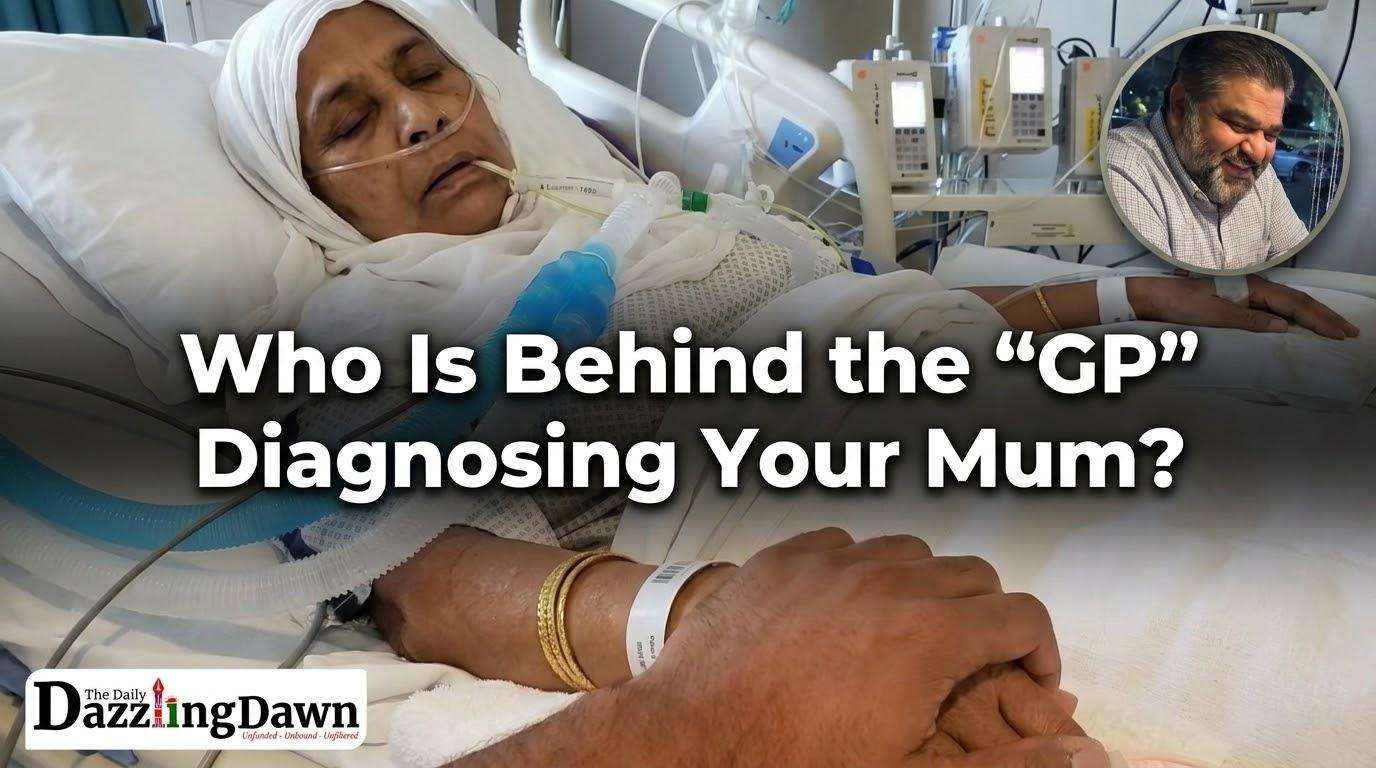
The catastrophic human cost of failing to look beyond haemorrhoids was underscored on 25 October 2026 in the New South Wales Supreme Court. Mr Peterkin, a father of one in his early forties, first presented to Dr Tadros in August 2022 reporting persistent rectal bleeding, localized pain, and altered bowel habits. Rather than conducting a thorough diagnostic interrogation and issuing an urgent specialist referral for a colonoscopy, the general practitioner attributed the bleeding to benign haemorrhoids. The court ruled that proper clinical questioning would probably have secured an accurate bowel cancer diagnosis by February 2023, a six-month window that robbed Mr Peterkin of almost five years of life expectancy. Although the judge noted contributory delays on the patient's part, the legal precedent sends an unmistakable message to primary care physicians in both Australia and the United Kingdom.
Within the British Bangladeshi and wider South Asian community, the clinical overlap between benign piles and lethal colorectal disease is worsened by deep-seated cultural modesty and healthcare avoidance. Audits compiled by NHS Bowel Cancer Screening Hubs consistently show that South Asian patients register significantly lower faecal immunochemical test completion rates—often trailing White British uptake by 15 to 20 percentage points in urban London districts. Daily Dazzling Dawn learned that many British Bangladeshi patients rely on over-the-counter ointments or traditional remedies for months, assuming rectal bleeding is merely a harmless flare-up of piles caused by spicy food or constipation. Clinicians emphasise that any persistent anal bleeding, unexplained weight loss, or tenesmus lasting more than three weeks demands an immediate faecal immunochemical test and endoscopic investigation through the NHS two-week-wait suspected cancer pathway.







.jpg)